 (+035) 527-1710-70
 NEWSLETTER

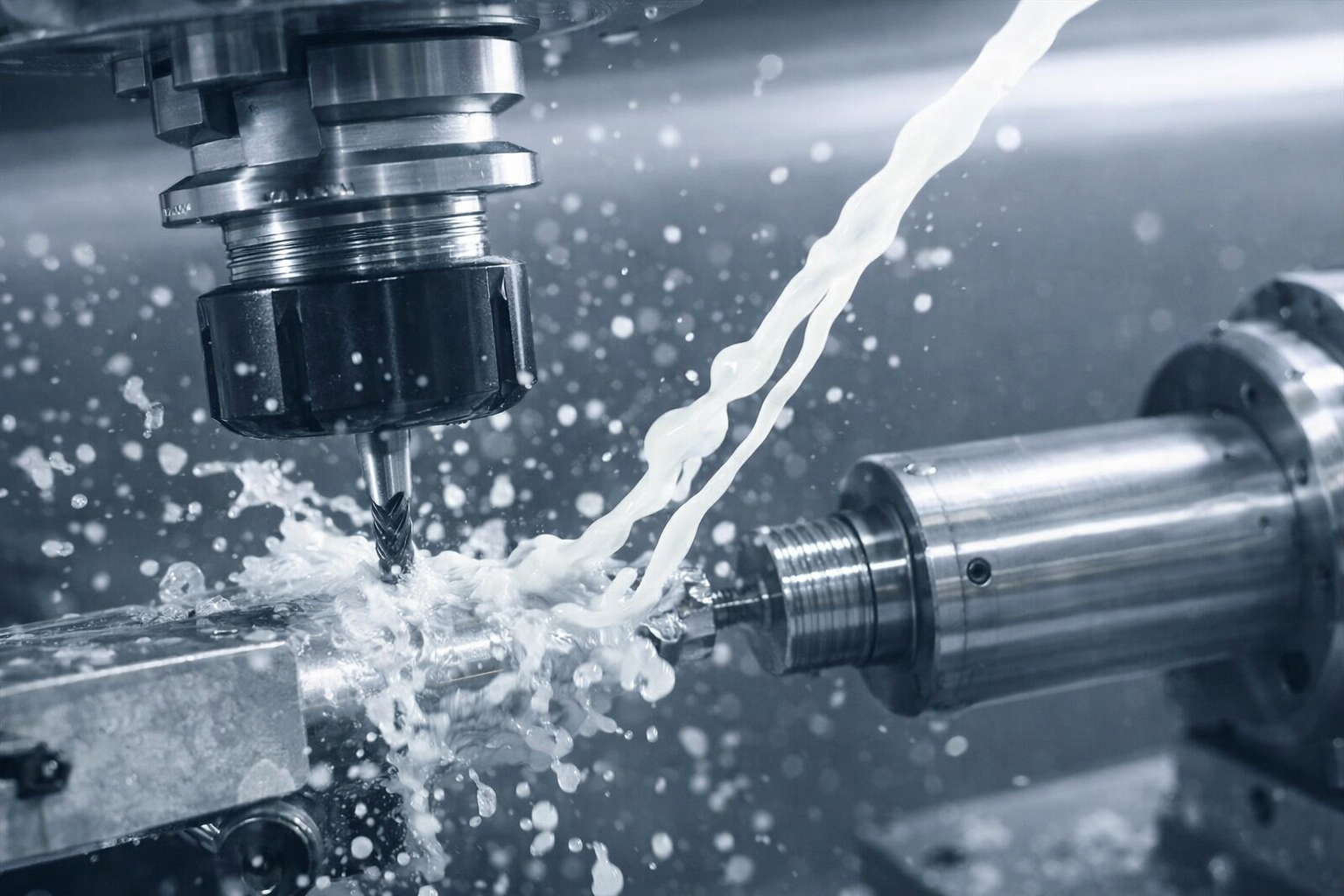
Milling machines are among the most important and widely used machine tools in modern manufacturing. From simple workshop operations to advanced aerospace component production, milling plays a crucial role in shaping raw materials into precise, functional parts.
Understanding what a milling machine is, how it works, and where it is applied helps manufacturers, engineers, and designers choose the most suitable machining solutions. With the evolution from manual milling to sophisticated multi-axis CNC machining centers, milling technology has become faster, more accurate, and more versatile than ever before.
This article provides a comprehensive and in-depth guide to milling machines, covering their definition, historical development, working principles, technical parameters, types, operations, tools, materials, applications, advantages, limitations, cost considerations, safety issues, and selection criteria.
What Is a Milling Machine?
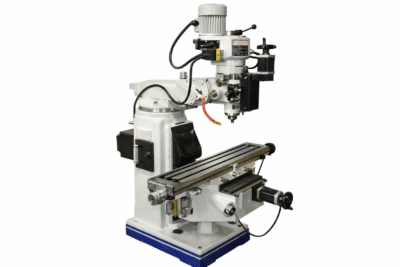
A milling machine is a machine tool that removes material from a stationary workpiece using a rotating cutting tool. The cutting tool typically has multiple cutting edges and removes material progressively as it rotates and advances into the workpiece.
Milling is a subtractive manufacturing process, meaning material is removed from a solid block to create the desired geometry. Milling machines can be operated:
Manually, where the operator controls tool movement
Automatically, using Computer Numerical Control (CNC)
Because cutting tools can be changed easily, milling machines are capable of performing a wide range of operations such as surface machining, slotting, drilling, contouring, and gear cutting. This versatility makes milling machines a core asset in almost every machining workshop.
History of Milling Machines
Before milling machines were invented, parts were shaped manually using hand tools such as files and chisels. This process was slow, labor-intensive, and highly dependent on operator skill.
The first true milling machine is widely attributed to Eli Whitney, who developed it in 1818 in New Haven, Connecticut. His motivation was to produce interchangeable firearm parts for government contracts, a requirement that demanded high precision and repeatability.
Over time, milling machines evolved through several stages:
Early mechanical and belt-driven mills
Electrically powered machines
Introduction of tracer-controlled systems
Development of numerical control (NC)
Modern CNC milling machines with multi-axis capability
Today, milling machines are fully integrated with CAD/CAM software, automation systems, and digital manufacturing workflows.
Uses of a Milling Machine
Milling machines are used to perform a wide variety of machining tasks, including:
Machining flat and curved surfaces
Drilling, boring, and reaming holes
Cutting slots, grooves, and keyways
Thread milling
Gear manufacturing
Complex 3D surface machining
Due to their adaptability, milling machines are used for prototyping, small-batch production, and large-scale mass manufacturing across many industries.
Main Components of a Milling Machine
Although milling machines vary in design, most share the following core components:
Base
The base supports the entire machine structure. It is typically made from cast iron to provide rigidity and vibration damping.
Column
The column is the vertical frame that houses internal drive mechanisms and supports moving components.
Knee
Mounted above the base, the knee supports the saddle and table. It moves vertically along the column.
Saddle
The saddle sits on the knee and enables transverse (Y-axis) movement of the worktable.
Worktable
The worktable holds the workpiece using clamps or fixtures. It usually provides longitudinal (X-axis) movement.
Spindle
The spindle holds and rotates the cutting tool. In advanced machines, it can rotate along multiple axes.
Arbor
The arbor is a tool-holding component used mainly in horizontal milling machines.
Headstock
The headstock houses the spindle drive motor and transmission system.
Overarm
The overarm supports the spindle and arbor assembly, improving rigidity.
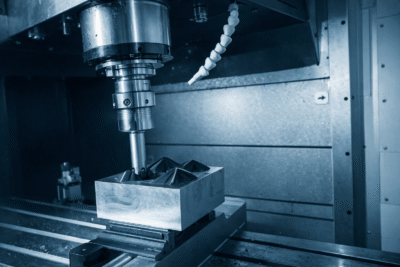
How Milling Machining Works
Part Design
The process begins with part design. For CNC milling, CAD models are converted into machining instructions using CAM software. Manual milling uses technical drawings and blueprints.
Machine Setup
The machine is configured with appropriate tools, spindle speed, feed rate, and depth of cut. CNC machines receive programs directly through the control system.
Workpiece Fixturing
The workpiece is securely clamped to prevent vibration and movement, which can damage tools or reduce accuracy.
Milling Operation
The rotating cutting tool removes material incrementally along predefined toolpaths. The feed rate determines how quickly the tool advances into the workpiece.
Inspection and Quality Control
After machining, parts are inspected for dimensional accuracy and surface quality. Additional machining passes may be performed if required.
Technical Parameters of a Milling Machine
Key technical parameters include:
Spindle Speed (n): Rotational speed of the tool (RPM)
Tool Diameter (Dc): Affects cutting forces and material removal rate
Cutting Speed (Vc): Linear speed at the cutting edge
Vc = π × Dc × n ÷ 1000
Feed Rate (Vf): Tool advancement speed into the workpiece
Depth of Cut (ap): Tool penetration depth, affecting tool wear and surface finish
Optimizing these parameters is critical for machining efficiency and tool life.
Types of Milling Machines
Based on Spindle Orientation
Vertical Milling Machines – Spindle oriented vertically; highly versatile
Horizontal Milling Machines – Spindle oriented horizontally; better for heavy cutting
Universal Milling Machines – Capable of both vertical and horizontal operations
Based on Number of Axes
3-axis – X, Y, Z linear movement
4-axis – Adds one rotary axis
5-axis – Two rotary axes for complex geometry
6-axis – Full spatial machining without repositioning
Based on Machine Structure
Fixed bed mills
Knee-type mills
Planer-type mills
C-frame mills
Traveling column mills
Gantry mills
Based on Control Method
Manual milling machines
Tracer-controlled machines
DRO milling machines
CNC milling machines
Milling Machine Operations
Common milling operations include:
Slab and face milling
End milling
Up milling and down milling
Slot, groove, and side milling
Form, profile, and contour milling
Gear, thread, cam, and angle milling
Plunge and peripheral milling
Face milling is the most widely used operation due to its versatility and surface quality.
Materials That Can Be Machined Using Milling Machines
Milling machines can cut:
Metals and alloys: steel, aluminum, titanium, brass, copper
Plastics: ABS, nylon, HDPE
Ceramics and glass
Composites: carbon fiber, FRP
Wood and engineered materials
Cutting Tools Used in Milling
Common milling tools include:
End mills
Face mills
Slab mills
Ball nose cutters
Slot drills
Fly cutters
Thread mills
Chamfer mills
T-slot cutters
Tool selection directly affects machining accuracy and surface finish.
Applications of Milling Machines
Milling machines are used in:
Automotive manufacturing
Aerospace and defense
Electronics and semiconductor production
Mold and die making
Medical and dental industries
Construction and energy sectors
Research, development, and prototyping
Advantages and Limitations of Milling Machines
Advantages
High versatility
Excellent dimensional accuracy
Consistent and repeatable results
Automation compatibility
Wide material compatibility
Superior surface finish
Limitations
High initial investment
Large space requirements
Tooling complexity
Limited access to bottom surfaces
Cost and Service Life of Milling Machines
New milling machines typically cost USD 10,000 to over USD 200,000, depending on size, axes, brand, and control system.
With proper maintenance, milling machines can operate reliably for 10–15 years or more.
Maintenance of Milling Machines
Milling machines are relatively easy to maintain when:
Manufacturer maintenance schedules are followed
Lubrication systems are properly serviced
Wear components are replaced periodically
Factors to Consider When Selecting a Milling Machine
Key selection factors include:
Control system (manual vs. CNC)
Machine type and configuration
Workpiece size and geometry
Machine power and rigidity
Budget constraints
Build quality and brand reputation
Where to Buy or Access Milling Machines
Options include:
Online machine tool suppliers
Local distributors and manufacturers
Used or refurbished equipment
Outsourcing to CNC milling service providers
Operating Difficulty and Skill Requirements
Operating a milling machine is not inherently difficult, but it requires:
Technical knowledge
Tooling experience
Safety awareness
CNC milling significantly reduces manual skill requirements but increases programming complexity.
Safety Hazards and Risks of Milling Machines
Potential hazards include:
Contact with rotating cutting tools
Flying chips and debris
Electrical risks
Noise and vibration exposure
Proper guarding, personal protective equipment, and safety training are essential.
Conclusion
Milling machines have revolutionized modern manufacturing by enabling precise, efficient, and repeatable material removal across a wide range of industries. From simple manual mills to advanced multi-axis CNC systems, milling remains a cornerstone of industrial production, prototyping, and innovation.
Choosing the right milling machine—and using it correctly—can significantly improve product quality, production efficiency, and manufacturing competitiveness. Contact us for more information.
FAQs
1. What is the difference between conventional milling and climb milling?
Conventional milling (up milling) occurs when the cutting tool rotates against the direction of feed, causing gradual chip thickness. Climb milling (down milling) happens when the cutter rotates in the same direction as the feed, producing a smoother surface finish and longer tool life. Climb milling is commonly used in CNC machining, while conventional milling is often preferred on manual machines due to safety considerations.
2. How accurate is CNC milling compared to manual milling?
CNC milling is significantly more accurate than manual milling. Typical CNC milling machines can achieve tolerances of ±0.005 mm or better, depending on machine quality and setup. Manual milling accuracy is largely dependent on operator skill and generally cannot match the consistency and repeatability of CNC systems.
3. What factors most affect tool wear in milling operations?
Tool wear in milling is influenced by several factors, including cutting speed, feed rate, depth of cut, tool material, workpiece material, and cooling conditions. Improper parameter selection or insufficient lubrication can rapidly reduce tool life and compromise surface quality.
4. Can milling machines perform drilling and tapping operations?
Yes, milling machines can perform drilling, tapping, reaming, and boring operations. CNC milling machines are particularly effective at combining these processes into a single setup, improving accuracy and reducing production time by eliminating the need for multiple machines.
5. What role does coolant play in milling operations?
Coolant helps reduce cutting temperature, lubricate the cutting zone, remove chips, and extend tool life. Depending on the application, milling machines may use flood coolant, mist coolant, or dry machining. The choice depends on material type, tool geometry, and environmental considerations.
6. How does machine rigidity affect milling performance?
Machine rigidity directly impacts surface finish, dimensional accuracy, and tool life. A rigid milling machine minimizes vibration and chatter during cutting, allowing higher cutting speeds and deeper cuts. This is especially critical for machining hard materials and maintaining tight tolerances.
7. Is milling suitable for high-volume mass production?
Yes, milling—especially CNC milling—is suitable for high-volume production when combined with automation, pallet changers, and optimized toolpaths. However, for extremely high-volume and simple geometries, processes like injection molding or die casting may be more cost-effective.
8. How do I choose between a vertical machining center (VMC) and a horizontal machining center (HMC)?
A vertical machining center is ideal for general-purpose machining, prototyping, and smaller parts due to easier setup and lower cost. A horizontal machining center is better suited for large-scale production, heavy material removal, and complex multi-face machining, as it offers improved chip evacuation and higher productivity.