 (+035) 527-1710-70
 NEWSLETTER

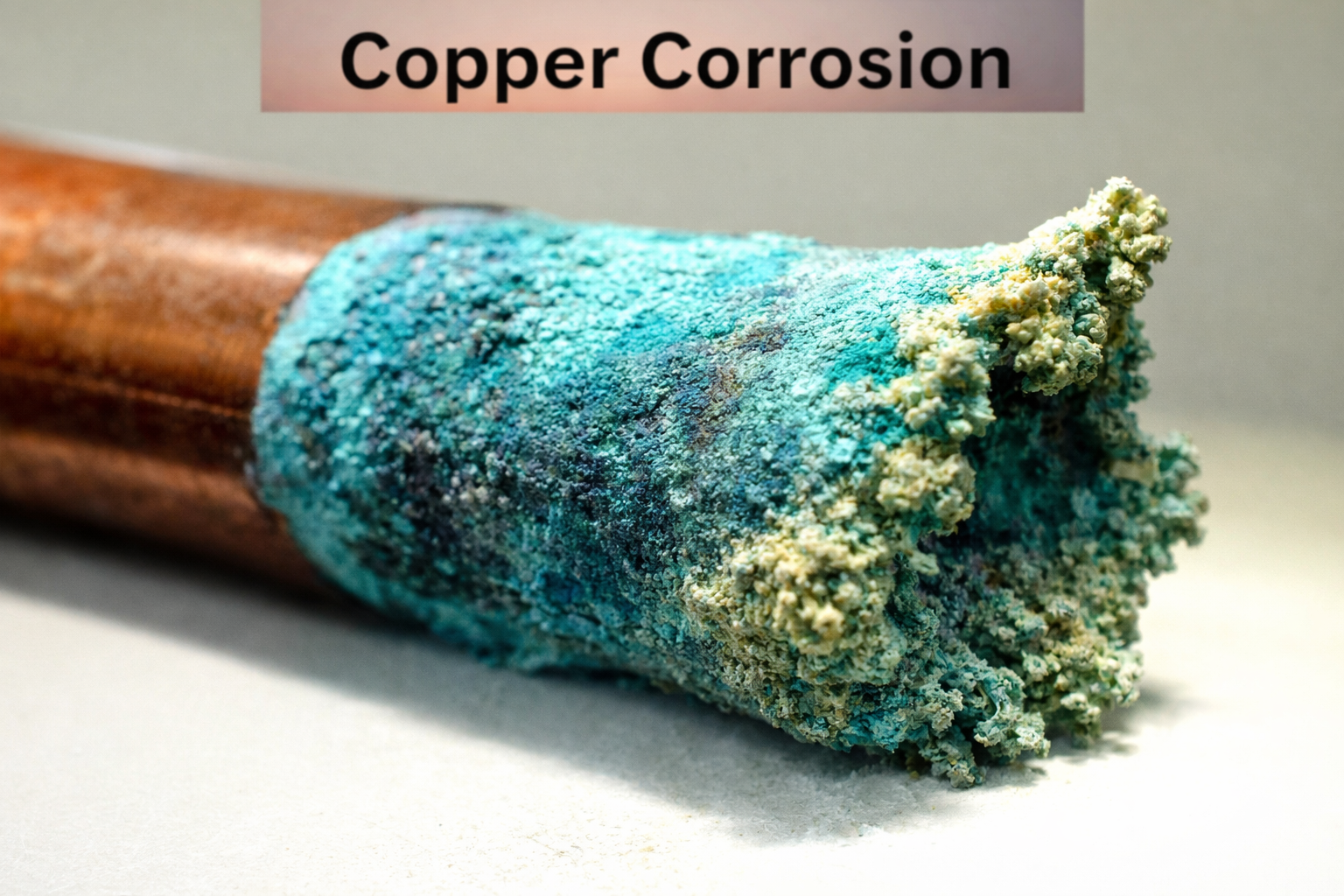
Copper has been valued by civilizations for more than 10,000 years, not only for its conductivity and workability but also for its remarkable resistance to corrosion. One striking example of this durability is copper roofing, which corrodes at a rate of less than 0.015 inches (0.4 mm) over 200 years under typical atmospheric conditions. This exceptional longevity makes copper one of the most reliable metals for long-term applications.
In today’s world—where sustainability, lifecycle cost, and material efficiency are increasingly important—copper’s corrosion resistance positions it as a strategic material across industries. From architectural landmarks and infrastructure to electronics, plumbing, and marine engineering, copper delivers performance that endures decades, and often centuries, with minimal maintenance.
Fundamental Properties of Copper Corrosion Resistance
Corrosion is a natural electrochemical process in which metals deteriorate due to reactions with their environment, typically involving oxygen, moisture, or pollutants. Many metals, such as iron and steel, suffer progressive degradation once corrosion begins.
Copper behaves differently. Rather than undergoing continuous material loss, copper reacts in a controlled manner with its surroundings, forming a stable surface layer that protects the underlying metal. This behavior is rooted in copper’s chemical stability and relatively low reactivity compared to ferrous metals.
The Science Behind Copper’s Corrosion Resistance
When copper is exposed to air or moisture, it initially reacts with oxygen to form a thin layer of cuprous oxide (Cu₂O). This layer adheres tightly to the metal surface and acts as the first line of defense.
Over time, further reactions occur between this oxide layer and environmental elements such as carbon dioxide, sulfur compounds, and chlorides. Unlike iron oxide (rust), which is porous and flakes off, copper corrosion products are dense, adherent, and stable. As a result, corrosion slows dramatically once the surface layer has matured.
This self-limiting corrosion mechanism is the scientific foundation of copper’s long service life.
Formation and Characteristics of Copper Patina
The most recognizable manifestation of copper’s corrosion resistance is patina, the blue-green surface film seen on aged copper structures.
Stages of Patina Formation:
Initial oxidation – Formation of reddish-brown copper oxides
Secondary reactions – Interaction with carbon dioxide, sulfur, and moisture
Mature patina – Formation of basic copper carbonates and sulfates
The resulting patina is chemically stable, tightly bonded to the surface, and highly resistant to further corrosion. In addition to protection, patina provides a distinctive aesthetic valued in architecture and art.
Long-Term Performance Benefits of Copper
Copper’s corrosion resistance translates directly into exceptional long-term performance. In architectural applications, copper roofs, facades, and flashings routinely last 100–200 years with minimal intervention.
A well-known example is the Statue of Liberty, whose copper skin has remained structurally intact since the late 19th century, despite constant exposure to wind, rain, and marine air.
Beyond longevity, copper requires little maintenance, reducing lifetime costs and eliminating the need for protective coatings or frequent replacement.
Industry Applications Benefiting from Corrosion Resistance

Construction and Architecture
Copper is widely used for roofing, cladding, gutters, and decorative elements due to its durability and weather resistance.
Plumbing Systems
Copper pipes resist corrosion, mineral buildup, and bacterial growth, ensuring clean water delivery and long service life.
Electronics and Electrical Systems
Copper’s resistance to oxidation helps maintain stable electrical connections in wiring, circuit boards, and connectors.
Marine and Coastal Applications
Copper-nickel alloys exhibit excellent resistance to seawater corrosion and biofouling, making them ideal for shipbuilding, offshore platforms, and desalination systems.
Environmental and Sustainability Benefits
Copper’s durability significantly reduces material waste. Longer service life means fewer replacements, less raw material extraction, and reduced manufacturing energy consumption.
Studies show that two-thirds of all copper produced since 1900 is still in use today, a remarkable statistic that underscores copper’s contribution to sustainability.
Copper’s Role in the Circular Economy
Copper fits perfectly into circular economy models due to two key attributes:
Extreme longevity
100% recyclability without performance loss
Unlike many materials, recycled copper retains the same corrosion resistance, conductivity, and mechanical properties as newly mined copper.
Quantifying Environmental Impact
Recycling copper requires up to 85% less energy than primary production. This energy savings results in substantial reductions in greenhouse gas emissions.
In construction, copper plumbing systems can exceed 50 years, while copper roofing can last more than a century—dramatically reducing waste generation. In electrical systems, copper’s efficiency and durability contribute to lower lifetime CO₂ emissions.
Copper and Sustainable Development Goals
Copper’s corrosion resistance supports UN Sustainable Development Goal 12, which focuses on responsible consumption and production. By minimizing waste, conserving resources, and enabling efficient recycling, copper plays a meaningful role in global sustainability efforts.
Role of Recycling in Preserving Corrosion Resistance
Maintaining copper’s corrosion-resistant properties during recycling requires advanced processing. Contamination with other metals or impurities can compromise performance, especially in demanding environments.
High-quality recycling ensures that recovered copper meets strict purity and performance standards.
Industry-Specific Benefits of Recycled Copper
Marine industries benefit from corrosion-resistant recycled copper alloys
Construction gains durable, low-maintenance materials
Electrical systems maintain conductivity and reliability
Manufacturers reduce costs and improve sustainability credentials
Supporting Innovation and Future Applications
High-quality recycled copper enables the development of advanced alloys and corrosion-resistant composites. By supporting recyclability at the design stage, manufacturers can ensure long-term material availability and performance.
Conclusion: Embracing Copper for a Sustainable Future
Copper’s corrosion resistance is more than a material advantage—it is a foundation for sustainable design, long-term reliability, and responsible resource use. Its ability to protect itself, last for generations, and be recycled endlessly makes copper one of the most future-ready materials available. Contact us for more information.
FAQs
1. Why does copper corrosion slow down over time instead of accelerating like steel?
Copper corrosion is self-limiting. When copper reacts with oxygen, it forms a dense, adherent oxide layer that remains bonded to the surface. This layer evolves into a stable patina that blocks further oxygen and moisture diffusion. In contrast, steel forms porous iron oxide (rust) that flakes off, continuously exposing fresh metal and accelerating corrosion.
2. How does environmental chemistry affect the composition of copper patina?
The patina’s composition depends on local atmospheric conditions:
Urban environments promote copper sulfate formation due to sulfur dioxide pollution
Coastal environments introduce chlorides, forming copper chlorides
Rural environments favor copper carbonates
Despite these variations, all mature patinas provide effective corrosion protection.
3. Can copper suffer from localized corrosion such as pitting?
Pure copper is highly resistant to pitting under normal atmospheric and freshwater conditions. However, pitting can occur in stagnant water, high-ammonia environments, or systems with improper water chemistry (low pH, high dissolved oxygen). Proper system design and water quality control eliminate most risks.
4. How does copper corrosion resistance compare to stainless steel?
Copper and stainless steel resist corrosion through different mechanisms. Stainless steel relies on a chromium oxide passive film that can be disrupted by chlorides, leading to pitting. Copper’s patina is more tolerant of chloride exposure, especially in marine environments, making copper-nickel alloys superior for seawater applications. However, stainless steel offers higher mechanical strength.
5. Does recycling affect copper’s corrosion resistance?
No. Copper is infinitely recyclable without degradation of corrosion resistance, conductivity, or mechanical properties—provided purity is maintained. High-quality recycling processes remove contaminants that could otherwise compromise corrosion performance in demanding applications.
6. How do copper alloys enhance corrosion resistance in extreme environments?
Alloying copper with elements such as nickel, aluminum, or tin improves resistance to specific corrosive agents:
Copper-nickel alloys excel in seawater
Aluminum bronze resists cavitation and erosion
Tin bronze performs well in industrial and chemical environments
These alloys expand copper’s usability in harsh conditions.
7. Is copper corrosion resistance affected by electrical current?
Under normal operating conditions, electrical current does not degrade copper corrosion resistance. However, stray currents or improper grounding can cause electrochemical corrosion in buried or submerged systems. Proper electrical design and cathodic protection prevent such issues.
8. How does copper’s corrosion resistance impact lifecycle cost analysis (LCCA)?
Copper’s long service life, minimal maintenance, and recyclability result in lower total lifecycle costs despite higher initial material costs. When replacement frequency, downtime, energy efficiency, and end-of-life value are included, copper often outperforms alternative materials in LCCA models.