 (+035) 527-1710-70
 NEWSLETTER

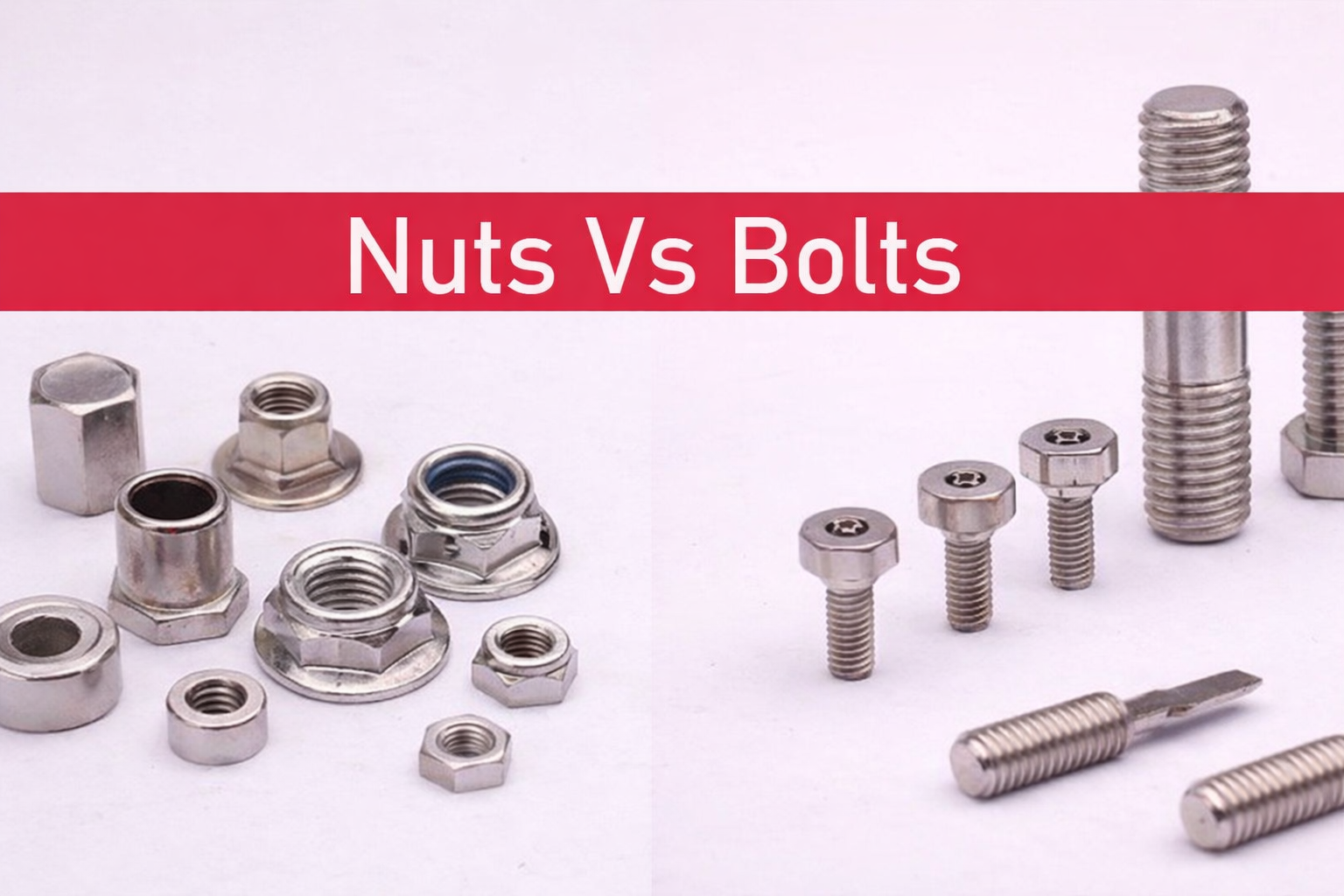
Fasteners may be small, but they play a huge role in keeping structures safe, machines running, and products reliable. Among all fasteners, nuts and bolts are the most widely used and best understood—yet many people still mix them up or choose the wrong type for the job.
This guide takes a deep dive into what nuts and bolts are, how they work together, their types, key differences, and how to choose the right combination for real-world applications.
What Are Nuts?
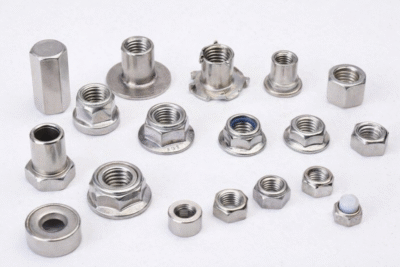
Nuts are internally threaded fasteners designed to work with bolts or threaded rods. The threads inside a nut match the external threads on a bolt, allowing them to lock together when tightened.
In simple terms, the nut is the gripping component. As it turns along the bolt’s threads, it pulls parts together and holds them in place through friction and clamping force.
Key Functions of Nuts
Provide internal threads for fastening
Apply clamping force to keep parts together
Help resist vibration and movement
Allow disassembly and reassembly when needed
You’ll find nuts everywhere—from household furniture to heavy industrial equipment and structural steel.
Types of Nuts and Their Uses
1. Acorn (Cap) Nuts
Acorn nuts have a rounded, closed end that covers the exposed bolt threads.
Why they’re used:
Protect threads from damage
Prevent injuries from sharp bolt ends
Improve appearance
Common applications: Furniture, railings, decorative assemblies
2. Hex Nuts
Hex nuts are the most common type of nut, recognized by their six-sided shape.
Main variants:
Hex Finish Nuts: General-purpose use
Heavy Hex Nuts: Thicker and stronger, used in construction
Small Pattern Hex Nuts: Compact, for tight spaces
Common applications: Machinery, automotive, structural connections
3. Lock Nuts
Lock nuts are designed to stay tight under vibration.
Popular types include:
Nylon Insert Lock Nuts (Nylock): Nylon ring grips threads
Prevailing Torque Nuts: Use friction to resist loosening
Serrated Flange Nuts: Bite into the surface
Castle Nuts: Secured with cotter pins for safety
Common applications: Automotive, aerospace, rotating equipment
4. Specialty Nuts
These nuts solve specific fastening problems.
Coupling Nuts: Join two threaded rods
Wing Nuts: Hand-tightened, no tools needed
Square Nuts: Larger contact area, better grip
T-Nuts: Embedded into wood
U-Nuts / Clip Nuts: Snap onto sheet metal
Speed Nuts: Quick installation without threading
What Are Bolts?
Bolts are externally threaded fasteners with a head on one end and threads on the other. They pass through holes in parts and are secured with a nut.
Unlike screws, bolts usually:
Require a nut
Are not self-tapping
Provide stronger, more reliable joints
Types of Bolts and Their Applications
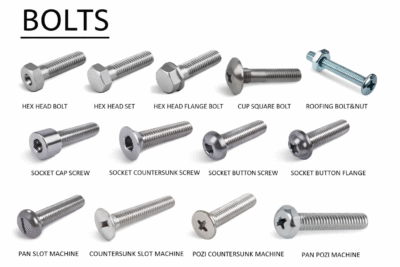
1. Carriage Bolts
Carriage bolts have a smooth, round head with a square neck underneath.
Why they’re useful:
Square neck prevents spinning
Clean, finished appearance
Common applications: Wood structures, decks, furniture
2. Anchor Bolts
Anchor bolts are used to secure structures to concrete.
Common types:
L-shaped
J-shaped
Expansion anchors
Common applications: Buildings, bridges, industrial foundations
3. Hex Bolts
Hex bolts have a six-sided head and are extremely versatile.
Common applications: Construction, machinery, steel structures
4. Specialty Bolts
Flange Bolts: Built-in washer spreads load
U-Bolts: Secure pipes and tubing
J-Bolts: Hook into concrete or wood
Lag Bolts: Heavy-duty wood fasteners
Eye Bolts: Lifting and rigging points
5. Innovative and Industrial Bolts
Blind Bolts: Installed from one side only
Double-End Bolts: Threaded on both ends
Machine Bolts: Used in metal-to-metal joints
Key Differences Between Nuts and Bolts
1. Threads: Inside vs. Outside
The biggest difference is where the threads are.
Nuts have threads on the inside. These threads grab onto something else.
Bolts have threads on the outside. They are the part that gets grabbed.
In simple terms, the bolt is the “screw-like” part, and the nut is the piece that spins onto it.
2. Main Job: Holding vs. Pulling Together
Nuts and bolts work together, but they don’t do the same work.
A bolt passes through holes in the parts you want to join. When tightened, it gets stretched slightly and provides strength.
A nut moves along the bolt’s threads and pulls everything together, creating clamping force.
You can think of the bolt as the backbone of the joint, while the nut is the part that locks it in place.
3. Shape and Design
Their shapes are also different because of how they’re used.
Nuts are usually short and flat, with shapes like hex, square, or round.
Bolts are longer and have a head on one end, which can be hex-shaped, round, or even flush.
The bolt head lets you hold the bolt steady with a tool, while you tighten the nut on the other side.
4. Size and Length
Another easy difference to spot is size.
Nuts are usually small and compact.
Bolts come in many lengths, depending on how thick the materials are that you’re fastening.
A bolt must be long enough to go through all the parts and still leave room for the nut to grip securely.
5. How They Are Used
They are often used together, but not always in the same way.
Nuts almost always need a bolt or threaded rod to work.
Bolts can sometimes be used without a nut, for example when screwed into a threaded hole.
This flexibility makes bolts useful in many different designs and assemblies.
6. Locking and Loosening
Both nuts and bolts can be designed to resist loosening, especially in places with vibration.
Nuts often include locking features, such as nylon inserts, serrations, or slots for pins.
Bolts may have special heads, flanges, or be used with washers and adhesives to stay tight.
In most cases, it’s the nut that does most of the “locking” work.
7. Replacement and Maintenance
When something goes wrong, it’s usually easier to replace one than the other.
Nuts are cheap and easy to swap out.
Bolts can be harder to replace, especially if they are built into a structure.
That’s why many designs allow the nut to wear out first—it’s faster and cheaper to fix.
| Aspect | Nuts | Bolts |
| Threads | Threads are on the inside | Threads are on the outside |
| Main Role | Tighten onto a bolt to lock parts together | Pass through parts and provide strength and support |
| How They Work | Move along the bolt threads when turned | Stay mostly still while the nut is tightened |
| Typical Shape | Short and flat (hex, square, round) | Long shaft with a head on one end |
| Size | Usually small and compact | Available in many lengths and sizes |
| Tool Use | Turned with a wrench or by hand (wing nut) | Held by the head using a wrench or socket |
| Used Alone? | No, needs a bolt or threaded rod | Sometimes yes, if screwed into a threaded hole |
| Locking Features | Often has locking designs (nylon insert, serrations, slots) | May use flanges, special heads, or washers |
| Resistance to Vibration | Helps prevent loosening when designed as a lock nut | Relies on nut, washer, or adhesive to stay tight |
| Replacement | Easy and cheap to replace | Can be harder to replace once installed |
| Common Materials | Steel, stainless steel, brass, zinc-coated | Steel, stainless steel, alloy steel, coated metals |
| Common Uses | Used in furniture, machinery, and equipment | Used in construction, machines, vehicles, and structures |
How Nuts and Bolts Work Together
When a nut is tightened onto a bolt:
Threads interlock
The nut moves along the bolt
Parts are pulled together
Clamping force holds everything in place
This clamping force, not the bolt itself, is what keeps the joint secure.
Why Compatibility Matters
Correct Sizing
Thread diameter and pitch must match
Metric bolts require metric nuts
Imperial bolts require imperial nuts
Thread Length
Too short → weak grip
Too long → exposed threads and safety risks
Bolt Grades and Strength
SAE Grades: 2, 5, 8
Metric Classes: 8.8, 10.9, 12.9
Higher grades mean higher strength—but they must be paired with matching nut grades.
Advanced Engineering Considerations
Material Selection
Carbon Steel: Strong, affordable, indoor use
Stainless Steel: Corrosion-resistant
Zinc-Coated: Rust protection
Nickel / Chrome: Durability and appearance
⚠ Mixing different metals can cause galvanic corrosion.
Load, Vibration, and Environment
High vibration → use lock nuts
Outdoor use → corrosion-resistant coatings
Structural loads → heavy hex bolts and nuts
Maintenance and Best Practices
Tips for Long Service Life
Inspect regularly for wear or rust
Use proper torque values
Apply lubrication or anti-seize
Replace damaged fasteners immediately
Store fasteners in dry conditions
Common Problems
Stripped threads: Over-tightening
Seized fasteners: Lack of lubrication
Corrosion: Wrong material choice
Conclusion
Nuts and bolts may look simple, but choosing the right type, size, material, and grade makes the difference between a reliable connection and a failed joint.
By understanding:
How nuts and bolts work together
Their key differences
Application-specific requirements
you can build stronger, safer, and longer-lasting assemblies—whether you’re working on furniture, machinery, or large-scale structures. Small parts. Big responsibility. Contact us for more information.
FAQs
1. How does preload affect bolt joint performance?
Preload is the initial tension applied to a bolt when it is tightened. Proper preload is critical because it creates the clamping force that holds the joint together.
Too little preload → joint can loosen under vibration
Too much preload → bolt may yield or fail from fatigue
In most engineering applications, bolts are tightened to 70–80% of their yield strength to achieve optimal joint reliability.
2. What is the difference between tensile load and shear load in bolted joints?
Tensile load pulls the bolt along its axis (trying to stretch it).
Shear load acts perpendicular to the bolt axis (trying to slide parts apart).
Well-designed bolted joints rely mainly on clamping force and friction to resist shear, not the bolt body itself. If the bolt is carrying shear directly, joint design may need improvement.
3. Why do bolts fail more often from fatigue than from overload?
In real applications, bolts rarely fail from a single excessive load. Instead, they fail due to fatigue, caused by repeated stress cycles.
Common fatigue contributors:
Insufficient preload
Vibration
Stress concentration at thread roots
Poor surface finish or corrosion
Fatigue cracks usually start at the first engaged thread, where stress is highest.
4. How do thread pitch and thread engagement affect strength?
Fine threads provide better load distribution and resistance to loosening but are more sensitive to damage.
Coarse threads are stronger in softer materials and easier to assemble.
A general engineering rule:
Minimum thread engagement should be 1× bolt diameter in steel
1.5–2× bolt diameter in softer materials like aluminum
5. What causes galling in stainless steel nuts and bolts?
Galling occurs when similar metals slide against each other under pressure, causing material transfer and thread seizure.
Stainless steel is especially prone to galling due to:
High friction
Work hardening
Lack of lubrication
Prevention methods:
Use anti-seize compounds
Apply lower tightening speeds
Use dissimilar grades or coated fasteners
6. When should torque control be replaced by tension control?
Torque control is common but indirect—it estimates bolt tension based on friction, which can vary widely.
Tension control methods (used in critical joints):
Hydraulic bolt tensioners
Direct tension indicators (DTIs)
Strain-based measurement
Tension control is preferred in:
Structural steel connections
Pressure vessels
Aerospace and power-generation equipment
7. How does surface finish and coating affect bolt performance?
Coatings influence both corrosion resistance and friction, which directly affects torque-to-tension relationships.
Examples:
Zinc-plated bolts reduce corrosion but increase friction
PTFE-coated bolts reduce friction, increasing achieved preload at the same torque
⚠ Engineers must adjust torque values when coatings change.
8. Why must nut grade match or exceed bolt grade?
If a nut is weaker than the bolt:
Nut threads may strip before the bolt reaches proper preload
Joint integrity is compromised
Best practice:
Nut strength ≥ bolt strength
Matching standards (SAE, ASTM, ISO) should always be followed
9. What role do washers play in bolted joints?
Washers are not just spacers. They:
Distribute load over a larger area
Protect softer materials
Reduce surface damage
Help achieve consistent torque
However, in high-vibration applications, standard flat washers may reduce preload stability. In these cases, flange bolts or specialized locking systems are preferred.
10. How do temperature changes affect bolted joints?
Thermal expansion and contraction can significantly change bolt tension.
Different materials expand at different rates
High temperatures can reduce bolt strength
Repeated thermal cycling can cause preload loss
This is critical in:
Engines
Power plants
Outdoor steel structures
Engineers often use high-temperature alloys or spring-loaded fastening systems to compensate.