 (+035) 527-1710-70
 NEWSLETTER

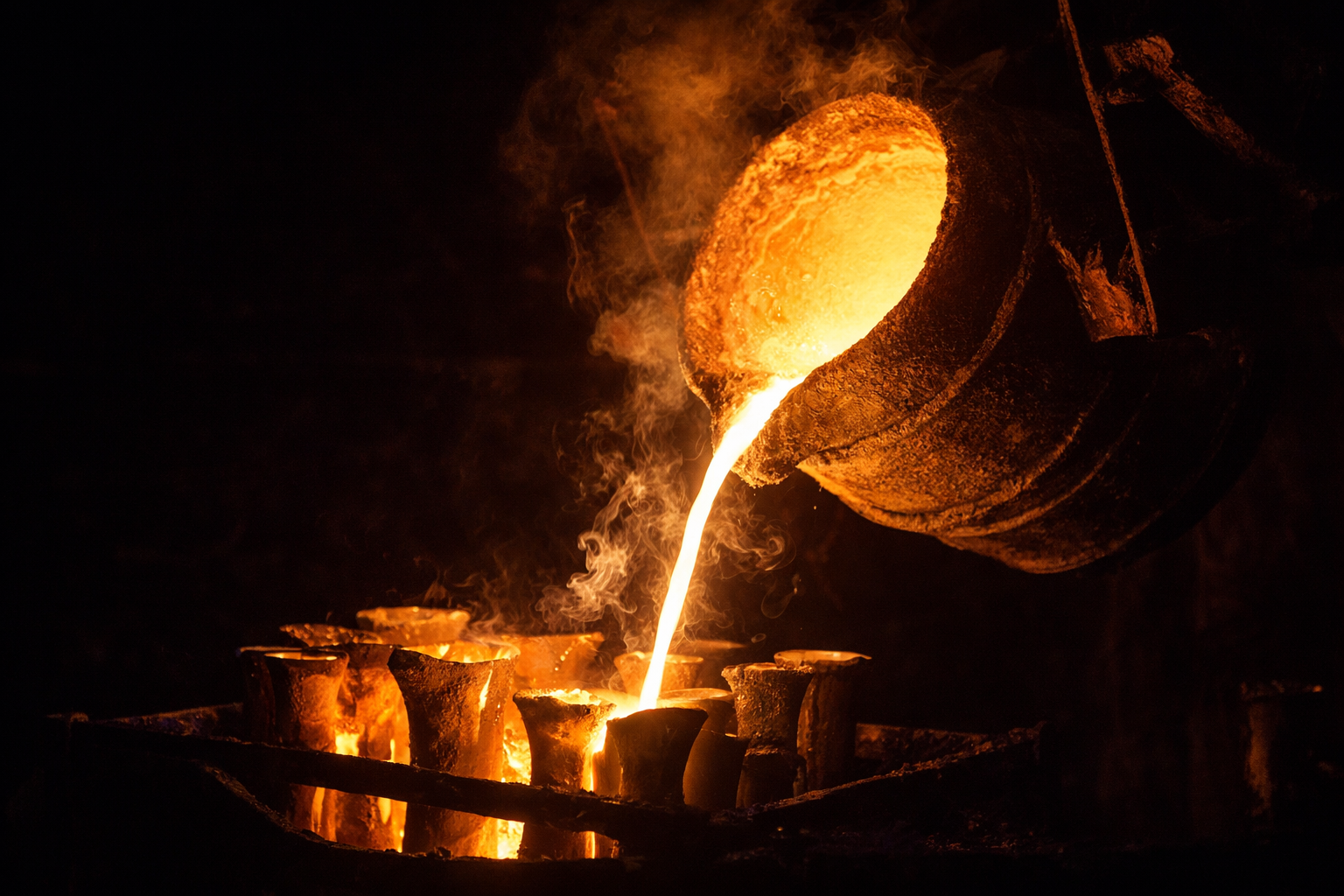
Metals are widely valued for their mechanical strength, durability, and ability to withstand extreme operating environments. Across industries such as aerospace, power generation, automotive manufacturing, metallurgy, construction, and electronics, metal components are routinely exposed to elevated temperatures, heavy loads, cyclic stresses, corrosive atmospheres, and high thermal gradients.
In such environments, temperature becomes a critical design constraint. Furnaces, combustion chambers, jet engines, exhaust systems, welding equipment, and high-speed machinery all operate near or above the thermal limits of certain metals. Among the many thermal properties engineers must consider, the melting point of a metal is one of the most fundamental and decisive.
Understanding metal melting points is essential not only for preventing catastrophic component failure but also for enabling efficient manufacturing processes such as casting, welding, and alloy production. This guide provides a detailed and systematic explanation of metal melting points, the science behind them, their industrial importance, and practical comparisons across common metals and alloys.
Definition of Metal Melting Point
The melting point of a metal is the temperature at which the metal undergoes a phase transition from a solid state to a liquid state under a given pressure, typically standard atmospheric pressure.
From a thermodynamic perspective, the melting point represents the temperature at which the Gibbs free energies of the solid and liquid phases are equal. At this point, solid and liquid coexist in equilibrium. When heat is added at the melting temperature, it does not raise the temperature of the metal; instead, the energy is absorbed as latent heat of fusion to break the metallic bonds holding the solid lattice together.
Once the metal has completely transitioned into the liquid phase, any additional heat input will again increase the temperature of the molten metal.
Importance of Metal Melting Temperature
Preventing Component and System Failure
One of the primary reasons melting temperature is critically important is its direct relationship to component failure. When a metal approaches its melting point, it loses structural integrity, stiffness, and load-bearing capacity. Even partial melting can cause deformation, leakage, or collapse.
For example:
If a furnace lining or structural support melts, the entire system may fail.
If a jet engine fuel nozzle reaches its melting point, molten metal can clog orifices, disrupt fuel flow, and lead to engine shutdown.
In exhaust or turbine systems, localized overheating may initiate melting and cause cascading failures.
It is important to note that metals can fail before reaching their melting point due to mechanisms such as creep, oxidation, thermal fatigue, and grain boundary weakening. Nevertheless, the melting point defines an absolute upper thermal limit beyond which a metal cannot function in a solid form.
Role in Manufacturing and Metalworking Processes
Melting temperature is equally important in manufacturing and processing operations. Many metalworking processes require metals to be fully or partially molten, including:
Smelting and refining
Fusion welding
Casting and die casting
Additive manufacturing processes such as metal powder bed fusion
Accurate knowledge of melting temperatures ensures that furnaces, crucibles, molds, welding equipment, and tooling materials are selected appropriately. For instance, casting dies must have significantly higher melting points than the molten metal to avoid deformation or failure during operation.
Factors Affecting the Melting Points of Metals
Atomic Structure and Metallic Bonding
The melting point of a metal is fundamentally determined by the strength of its metallic bonds. Metallic bonding arises from a lattice of positively charged metal ions surrounded by a “sea” of delocalized electrons. These free electrons create cohesive forces that hold the atoms together.
Stronger metallic bonds require more thermal energy to break, resulting in higher melting points. Metals with a greater number of delocalized electrons and stronger interatomic attractions generally exhibit higher melting temperatures.
Atomic Size and Electron Configuration
Atomic size plays a significant role in determining bond strength. Larger atoms have outer electrons that are farther from the nucleus, experiencing weaker electrostatic attraction. As a result, metals with larger atomic radii often have lower melting points.
Transition metals, with partially filled d-orbitals, tend to have stronger metallic bonding due to enhanced electron interactions, which explains their relatively high melting points compared to alkali and alkaline earth metals.
Crystal Lattice Structure
The arrangement of atoms in a metal’s crystal lattice also influences its melting point. Common lattice structures include:
Body-centered cubic (BCC)
Face-centered cubic (FCC)
Hexagonal close-packed (HCP)
FCC and HCP structures are more densely packed and energetically stable, generally leading to higher melting points than less tightly packed structures.
Effects of Alloying and Impurities
Pure metals have well-defined melting points, while alloys typically melt over a temperature range. Alloying elements can either raise or lower melting temperatures depending on their atomic interactions.
For example, adding carbon to iron to form steel increases strength and alters the melting range. High-alloy steels and superalloys are specifically engineered to maintain solid strength at elevated temperatures.
Classification of Metals by Melting Point
High Melting Point Metals
High melting point metals are essential in extreme-temperature environments. These include:
Tungsten
Rhenium
Tantalum
Osmium
Molybdenum
Such metals are commonly used in aerospace, furnace components, nuclear applications, electrical contacts, and high-performance tooling due to their ability to maintain structural stability at elevated temperatures.
Medium Melting Point Metals
Metals such as iron, copper, and most steels fall into the medium melting point category. They offer a balance between thermal resistance, formability, cost, and mechanical strength.
These metals dominate construction, automotive manufacturing, electrical systems, and general industrial applications because they can be processed efficiently while still performing reliably under moderate heat.
Low Melting Point Metals
Low melting point metals include gallium, cesium, and mercury. Their ability to melt at or near room temperature makes them suitable for specialized applications such as:
Temperature measurement devices
Low-temperature alloys
Semiconductor and electronics manufacturing
Metals with Extreme Melting Points
Highest Melting Point Metal
Tungsten has the highest melting point of all metals at approximately 3422°C (6192°F). This exceptional property makes it indispensable in applications such as rocket engines, high-temperature furnaces, electrical filaments, and aerospace components.
Lowest Melting Point Metal
Mercury has the lowest melting point of any metal at −38.83°C (−37.89°F). It is the only metal that remains liquid at room temperature, which historically made it valuable in thermometers, barometers, and scientific instruments.
Influence of External Conditions on Melting Points
Although melting points are typically measured under standard atmospheric pressure, they can change under different conditions:
High pressure generally increases melting points by forcing atoms closer together.
Nanoparticles and thin films often exhibit reduced melting points due to high surface-area-to-volume ratios.
Impurities and alloying elements modify melting behavior.
Environmental conditions, such as reactive atmospheres, can also influence effective melting behavior.
Practical Comparison of Common Metal Melting Points
Aluminum: Low melting point, excellent for casting and lightweight structures
Copper: Balanced melting point and electrical conductivity
Brass: Composition-dependent melting range for decorative and functional parts
Iron: High melting point supports structural applications
Steel: Variable melting range enables wide industrial versatility
Melting Points of Metals Reference Chart
Melting point charts provide engineers and manufacturers with quick reference data to ensure proper material selection. Typical charts include values in both Celsius and Fahrenheit for common metals, alloys, and high-temperature materials.
| Metal | Melting Point (°C) | Melting Point (°F) |
| Aluminum | 660 | 1220 |
| Brass | 930 | 1710 |
| Aluminum Bronze* | 1027–1038 | 1881–1900 |
| Chromium | 1860 | 3380 |
| Copper | 1084 | 1983 |
| Gold | 1063 | 1945 |
| Inconel* | 1390–1425 | 2540–2600 |
| Cast Iron | 1204 | 2200 |
| Lead | 328 | 622 |
| Molybdenum | 2620 | 4748 |
| Nickel | 1453 | 2647 |
| Platinum | 1770 | 3218 |
| Silver | 961 | 1762 |
| Carbon Steel* | 1425–1540 | 2597–2800 |
| Stainless Steel* | 1375–1530 | 2500–2785 |
| Titanium | 1670 | 3038 |
| Tungsten | 3400 | 6152 |
| Zinc | 420 | 787 |
* Melting points shown as ranges indicate alloys or materials with variable compositions.
Role of Melting Point Knowledge in Material Selection
Selecting the correct metal for a given application requires understanding not only melting point but also how close operating temperatures approach that limit. Proper material selection ensures:
Structural safety
Long-term reliability
Manufacturing efficiency
Cost optimization
Melting point data is a foundational parameter in engineering design and thermal analysis.
Conclusion
The melting points of metals are a fundamental property that directly influences manufacturing processes, material selection, component performance, and system safety. By understanding the scientific principles behind melting behavior and the practical implications across different metals and alloys, engineers, designers, and manufacturers can make informed decisions that improve reliability, efficiency, and performance.
Accurate knowledge of metal melting points remains essential in modern industry, where materials are increasingly pushed to their thermal and mechanical limits. Contact us for more information.
FAQs
1. Is Melting Point the Same as Operating Temperature?
No. The melting point represents the temperature at which a metal transitions from solid to liquid, while the maximum operating temperature is significantly lower. In real-world applications, metals must operate well below their melting points to avoid creep, oxidation, thermal fatigue, and loss of mechanical strength. Engineers typically apply safety margins when defining allowable service temperatures.
2. How Does Melting Point Affect Metal Strength at High Temperatures?
As a metal approaches its melting point, its yield strength, tensile strength, and hardness decrease rapidly. Atomic mobility increases, dislocations move more easily, and grain boundaries weaken. Even at temperatures far below melting, prolonged exposure can cause creep deformation, which is why melting point alone is not sufficient to define high-temperature performance.
3. Why Do Alloys Often Have a Melting Range Instead of a Single Melting Point?
Unlike pure metals, alloys consist of multiple elements that melt at different temperatures. As a result, alloys typically exhibit a melting range between the solidus temperature (where melting begins) and the liquidus temperature (where the alloy becomes fully liquid). This behavior is critical in casting, welding, and heat-treatment processes.
4. Does a Higher Melting Point Always Mean Better Heat Resistance?
Not necessarily. While a high melting point indicates thermal stability, other properties such as oxidation resistance, creep strength, thermal conductivity, and phase stability are equally important. For example, aluminum has a relatively low melting point but performs well in many high-temperature applications due to its protective oxide layer.
5. How Do Melting Points Influence Welding and Joining Processes?
Melting points determine the required heat input for welding and brazing operations. Metals with high melting points require more energy and specialized equipment, while mismatched melting points in dissimilar metals can lead to weak joints, distortion, or metallurgical defects. Proper filler material selection is also directly tied to melting temperature compatibility.
6. Can Heat Treatment Change the Melting Point of a Metal?
Heat treatment does not change the melting point of a pure metal. However, in alloys, heat treatment can alter microstructure and phase distribution, which may slightly affect the melting range and significantly influence mechanical and thermal performance below the melting point.
7. Why Are High-Melting-Point Metals Difficult to Manufacture?
Metals such as tungsten and tantalum require extremely high processing temperatures, specialized furnaces, and controlled atmospheres. They are difficult to cast and often must be processed using powder metallurgy or advanced additive manufacturing techniques. This complexity contributes to higher costs and longer production lead times.
8. How Is Melting Point Data Used in Material Selection for Extreme Environments?
Engineers use melting point data as a baseline thermal limit when designing components for furnaces, turbines, engines, and reactors. Combined with data on creep resistance, oxidation behavior, and thermal cycling, melting point information helps ensure long-term reliability, safety, and compliance with engineering standards.