 (+035) 527-1710-70
 NEWSLETTER

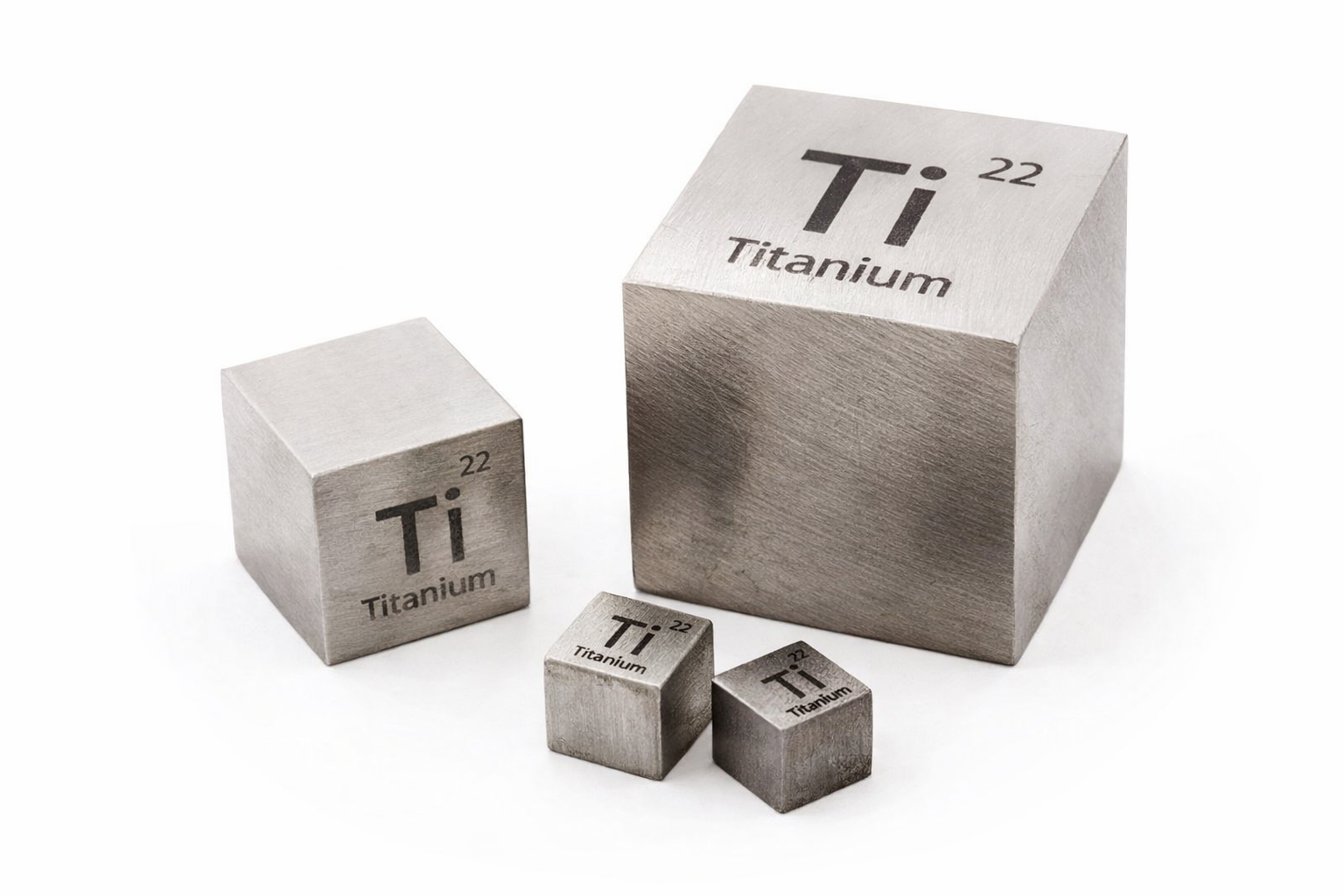
With an atomic number of 22, titanium belongs to the transition metals and offers a unique balance of mechanical strength, low density, and chemical stability that few materials can match. Unlike traditional metals such as carbon steel or aluminum, titanium delivers long-term performance in extreme environments—without significant degradation.
For engineers, product designers, and procurement managers, understanding titanium is critical when selecting materials for high-reliability applications.
What Is Titanium? (Fundamentals)
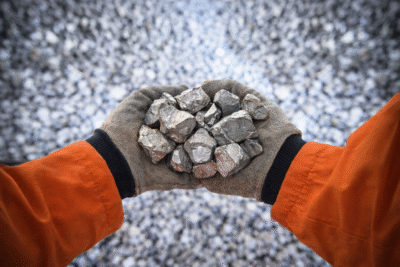
Titanium is a transition metal located in the d-block of the periodic table, characterized by partially filled d-orbitals that influence its bonding and mechanical behavior.
Key Characteristics
Symbol: Ti
Atomic Number: 22
Atomic Mass: 47.867 g/mol
Classification: Transition Metal
Titanium does not occur naturally in its pure metallic form. Instead, it is found in mineral ores such as:
Rutile (TiO₂)
Ilmenite (FeTiO₃)
From an industrial perspective, titanium is valued for:
High mechanical strength under stress
Resistance to oxidation and corrosion
Stable performance in chemically aggressive environments
These properties make titanium a preferred material in critical engineering systems where failure is not an option.
History of Titanium
Discovery
Titanium was first discovered in 1791 by British mineralogist William Gregor, who identified a new oxide in black sand (menaccanite). In 1795, German chemist Martin Heinrich Klaproth independently confirmed the element and officially named it.
Naming Origin
The name “titanium” originates from the Titans of Greek mythology, symbolizing strength, endurance, and resilience—qualities that the material indeed demonstrates in real-world applications.
Industrial Breakthrough
For over a century, titanium remained largely a laboratory curiosity due to extraction challenges. The turning point came in the 1940s with the development of the Kroll process, enabling large-scale production of ductile titanium metal.
After World War II, titanium rapidly gained adoption in:
Aerospace engineering
Military systems
Chemical processing
Today, it is a cornerstone material in advanced manufacturing.
How Titanium Is Produced
Titanium extraction is complex and energy-intensive, which explains its relatively high cost.
Step-by-Step Production Process
Ore Processing
Titanium is extracted from rutile or ilmenite ores.
Chlorination
The ore is converted into titanium tetrachloride (TiCl₄).
Purification
Impurities are removed through distillation.
Reduction (Kroll Process)
TiCl₄ is reduced using magnesium at high temperatures to produce titanium sponge.
Vacuum Separation
Residual magnesium and byproducts are removed.
Melting & Refining
The titanium sponge is melted into ingots for industrial use.
Key Challenge
Titanium has a strong affinity for oxygen, requiring strictly controlled environments during processing to prevent contamination.
Physical Properties of Titanium
Titanium’s physical properties make it ideal for high-performance applications.
| Property | Value | Industrial Significance |
| Density | ~4.5 g/cm³ | Lightweight vs steel |
| Melting Point | 1668°C | High-temperature tolerance |
| Tensile Strength | Comparable to steel | Structural reliability |
| Elastic Modulus | ~110 GPa | Flexibility (good for implants) |
| Thermal Expansion | Low | Dimensional stability |
| Electrical Conductivity | Low | Not used for electrical conduction |
Engineering Insight
Titanium’s lower elastic modulus compared to steel allows it to absorb stress better, reducing fatigue failure in dynamic applications.
Chemical Properties of Titanium
Titanium’s chemical behavior is dominated by its passive oxide layer (TiO₂).
Key Chemical Features
Corrosion Resistance
The oxide layer protects against:
Seawater
Acids
Industrial chemicals
Oxidation Stability
Rapid formation of a dense oxide film prevents further degradation.
High-Temperature Reactivity
Titanium reacts with oxygen, nitrogen, and hydrogen at elevated temperatures.
Biocompatibility
Minimal ion release makes it safe for human implants.
Atomic Structure and Isotopes
Titanium’s atomic structure directly influences its properties.
Protons: 22
Electrons: 22
Most abundant isotope: Ti-48
Stable Isotopes
Ti-46
Ti-47
Ti-48
Ti-49
Ti-50
These stable isotopes ensure consistent and predictable material behavior in industrial applications.
What Makes Titanium Unique?
Titanium is not just another metal—it offers a rare combination of properties:
High Strength-to-Weight Ratio
Stronger than many steels but nearly 40% lighter.
Exceptional Corrosion Resistance
Outperforms:
Carbon steel
Aluminum
Many stainless steels
Biocompatibility
Supports osseointegration, making it ideal for:
Dental implants
Joint replacements
Fatigue Resistance
Performs well under cyclic loading conditions.
Low Elastic Modulus
Closer to human bone → reduces stress shielding.
Appearance and Surface Characteristics
Titanium has a distinct silvery-gray metallic appearance.
Surface Features
Naturally forms a thin oxide layer
Matte finish after exposure
Highly stable surface
Anodization
Titanium can display vibrant colors (blue, purple, gold) through controlled oxidation—without pigments.
Titanium vs Other Metals
Titanium vs Stainless Steel
Titanium is lighter
Better corrosion resistance
Higher cost
Titanium vs Aluminum
Stronger
Better high-temperature performance
Heavier than aluminum
Titanium vs Nickel Alloys (Inconel)
Titanium is lighter
Inconel performs better at extreme temperatures
Titanium vs Carbon Steel
Titanium does not rust
Longer service life
Higher upfront cost but lower lifecycle cost
Titanium Alloys and Compounds
Titanium is often alloyed to enhance performance.
Common Alloying Elements
Aluminum (strength)
Vanadium (toughness)
Molybdenum (heat resistance)
Titanium Dioxide (TiO₂)
Widely used in:
Paints
Plastics
Sunscreens
Types of Titanium Materials
Commercially pure titanium
Titanium alloys (e.g., Ti-6Al-4V)
Titanium-stabilized steels
Applications of Titanium
Aerospace
Aircraft structures
Engine components
Landing gear
Medical Industry
Orthopedic implants
Dental fixtures
Surgical instruments
Industrial Equipment
Heat exchangers
Chemical reactors
Marine Applications
Offshore structures
Ship components
Consumer Products
Watches
Eyewear
Sports equipment
Safety and Handling
Titanium is generally safe, but precautions are necessary.
Key Points
Non-radioactive
Non-toxic
Flammable in powder form
Safety Measures
Avoid dust accumulation
Use proper ventilation
Store in controlled environments
Limitations of Titanium
Despite its advantages, titanium has some constraints:
High Cost (material + processing)
Difficult Machining
Limited High-Temperature Strength
Not suitable for extreme heat vs superalloys
Conclusion
Titanium stands out as one of the most advanced engineering materials available today. Its combination of:
Lightweight strength
Corrosion resistance
Biocompatibility
makes it indispensable in industries where performance, durability, and reliability are critical.
As manufacturing technologies evolve, titanium will continue to play a key role in aerospace innovation, medical advancements, and high-performance industrial systems.
FAQs
1. Is titanium stronger than steel?
Yes, in terms of strength-to-weight ratio.
2. Why is titanium expensive?
Due to complex extraction and processing.
3. Does titanium rust?
No, it forms a protective oxide layer instead.
4. Can titanium be machined?
Yes, but requires specialized tooling.
5. Is titanium safe for the human body?
Yes, it is highly biocompatible.
Get Custom Titanium Parts (B2B CTA)
If you are sourcing titanium components for your project, choosing the right supplier is critical.
We support:
Custom titanium parts manufacturing
CNC machining & precision stamping
Titanium terminals and connectors
Small to large production volumes
👉 Send your drawings or specifications today to get a fast quotation.
👉 Our engineering team will help you select the most cost-effective titanium solution.