 (+035) 527-1710-70
 NEWSLETTER

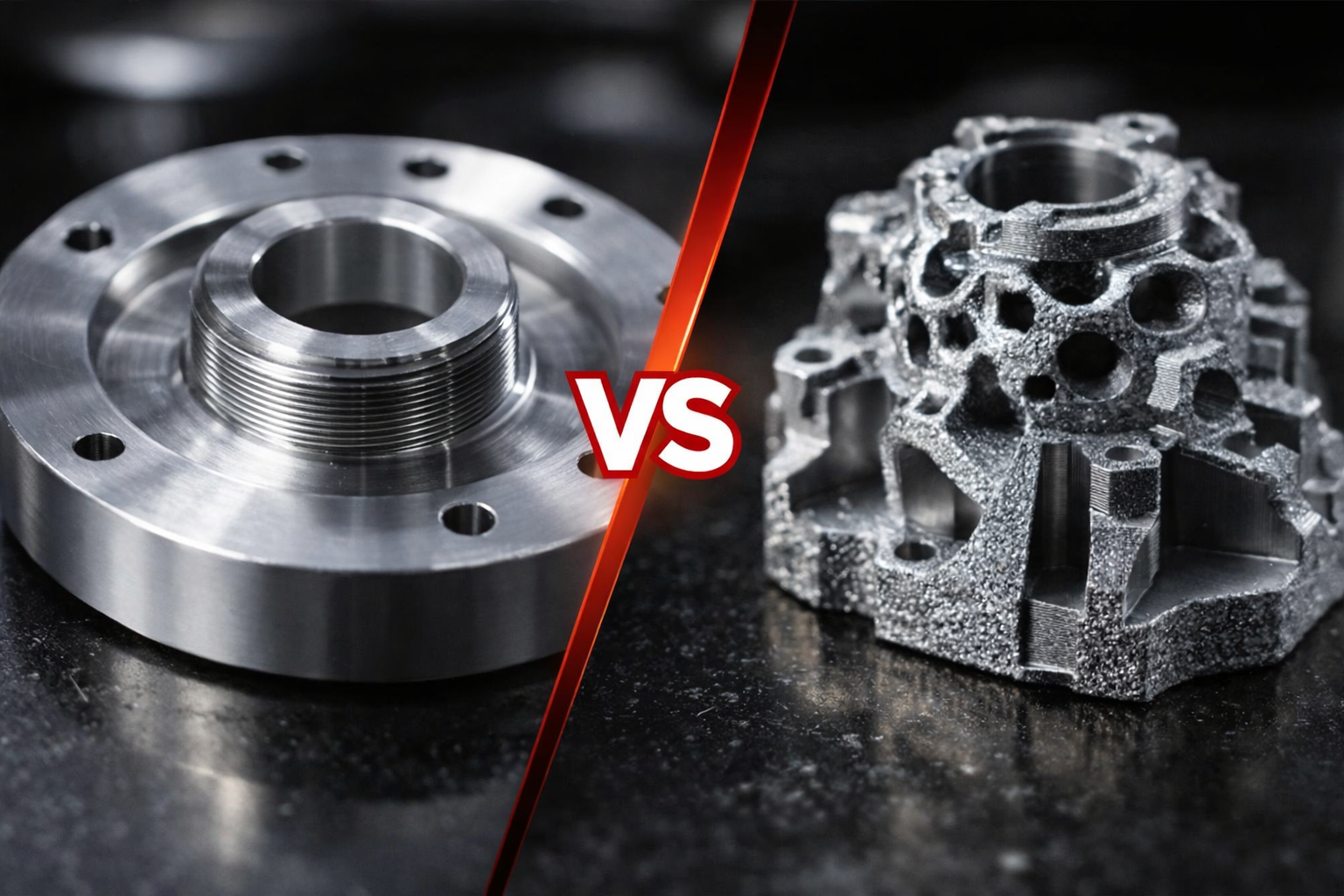
Choosing the right manufacturing process is one of the most critical decisions in product development. Among the most widely used metal fabrication methods, casting and machining stand out as two fundamentally different approaches.
Casting forms parts by pouring molten metal into a mold
Machining removes material from a solid block using cutting tools
Each method offers unique advantages in terms of cost, precision, scalability, and design flexibility.
For engineers, OEMs, and sourcing managers, the challenge is not understanding these processes individually—but knowing which one is right for a specific application.
In this guide, you’ll learn:
The working principles of casting and machining
Their advantages and limitations
A detailed comparison across key factors
A practical framework to help you choose the right process
Quick Answer: Casting vs Machining
Which One is Better?
| Criteria | Casting | Machining |
| Best For | High-volume production | Low-to-medium volume |
| Complexity | Complex shapes, internal cavities | High-detail external features |
| Precision | Moderate | Very high |
| Cost per Part | Low (at scale) | Higher |
| Tooling Cost | High upfront | Low |
👉 Summary:
Choose casting for large volumes and complex geometries
Choose machining for precision parts and small batches
What is Casting?
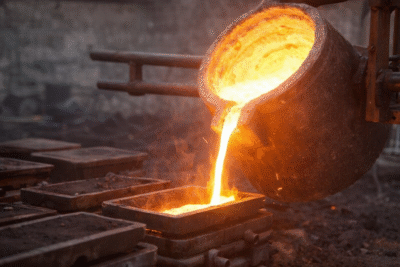
Definition
Casting is a manufacturing process where molten metal is poured into a mold cavity, allowed to solidify, and then removed as a finished or near-finished part.
How Casting Works
The casting process typically includes:
Melting raw metal in a furnace
Pouring molten metal into a mold
Solidification, involving:
Nucleation
Grain growth
Crystal structure formation
Ejection and finishing
The internal structure of cast parts depends heavily on:
Cooling rate
Alloy composition
Mold design
Advantages of Casting
1. Ideal for Complex Geometries
Casting can produce:
Internal cavities
Hollow structures
Intricate shapes
2. Cost-Effective for Mass Production
Once tooling is created:
Millions of identical parts can be produced
Cost per unit decreases significantly
3. Wide Material Compatibility
Ferrous metals (iron, steel)
Non-ferrous metals (aluminum, zinc, magnesium)
4. Large Size Capability
Casting can produce:
Small precision parts
Large industrial components
5. Insert Integration
Allows embedding components during casting (e.g., bushings, threaded inserts)
Disadvantages of Casting
Defects Risk: porosity, shrinkage, cracks
High Tooling Cost: molds and dies are expensive
Lower Precision compared to machining
Environmental Impact: emissions during melting
What is Machining?
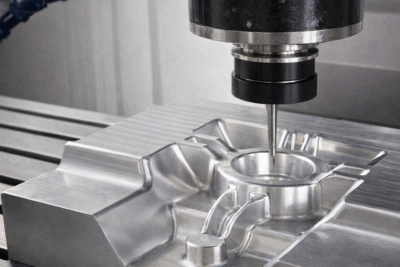
Definition
Machining is a subtractive manufacturing process where material is removed from a workpiece using cutting tools to achieve the desired shape and dimensions.
How Machining Works
Modern machining is dominated by CNC (Computer Numerical Control):
CAD model creation
Toolpath programming (G-code)
Automated cutting process
Finishing operations
Advantages of Machining
1. High Precision
Tolerances as tight as ±0.001”
Ideal for aerospace and medical parts
2. Excellent Surface Finish
Minimal post-processing required
3. Fast for Prototyping
No need for expensive molds
Quick turnaround
4. Wide Material Range
Metals, plastics, composites, ceramics
5. High Repeatability
CNC ensures consistent results
Disadvantages of Machining
Material Waste (chips and scrap)
Limited Internal Geometry
Higher Cost per Part (especially at scale)
Machine Size Constraints
Types of Casting Processes
Sand Casting
Low cost
Suitable for large parts
Rough surface finish
Die Casting
High precision
Excellent surface finish
Ideal for mass production (e.g., zinc, aluminum parts)
Investment Casting
High detail and accuracy
Suitable for complex geometries
Common in aerospace
Types of Machining Processes
Milling
Multi-axis cutting
Suitable for complex shapes
Turning
Rotating workpiece
Ideal for cylindrical parts
Drilling
Hole creation
High accuracy
Grinding
Fine finishing
High surface quality
Casting vs Machining: Key Differences
Comparison Table
| Factor | Casting | Machining |
| Tooling | High cost molds | Cutting tools |
| Precision | Medium | High |
| Complexity | Internal features | External precision |
| Volume | High-volume | Low-medium volume |
| Cost | Low per unit (scale) | Higher per unit |
| Waste | Minimal | High |
Key Insights
Casting is economical at scale
Machining is superior in precision
Hybrid approaches often deliver the best results
When to Choose Casting
Choose casting when:
Production volume is high
Parts have complex internal geometry
Cost per unit must be minimized
Typical Applications
Automotive engine components
Industrial housings
Consumer hardware
When to Choose Machining
Choose machining when:
High precision is required
Production volume is low
Rapid prototyping is needed
Typical Applications
Aerospace components
Medical devices
Precision connectors and terminals
Hybrid Approach: Casting + Machining
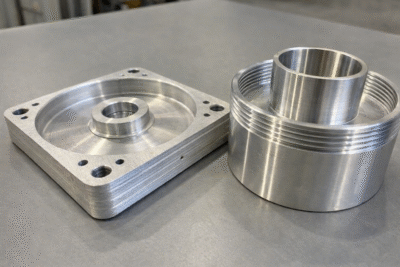
Many manufacturers combine both processes:
Workflow
Cast near-net shape
CNC machine critical features
Benefits
Lower cost than full machining
Higher precision than casting alone
👉 This is widely used in:
Automotive
Industrial equipment
Electronics components
How to Choose: Decision Framework
Step 1: Production Volume
Low → Machining
High → Casting
Step 2: Part Complexity
Internal cavities → Casting
Fine details → Machining
Step 3: Precision Requirements
Tight tolerance → Machining
Standard tolerance → Casting
Step 4: Material Selection
High melting point → Machining
Non-ferrous → Casting
Step 5: Budget
Limited upfront → Machining
Long-term savings → Casting
Step 6: Lead Time
Fast prototype → Machining
Mass production → Casting
Industry Applications
| Industry | Casting | Machining |
| Automotive | Engine blocks | Gears |
| Aerospace | Housings | Precision parts |
| Electronics | Enclosures | Connectors |
| Medical | Frames | Implants |
Common Mistakes to Avoid
Choosing casting for low-volume projects
Overusing machining for simple parts
Ignoring tooling costs
Not considering hybrid manufacturing
FAQs
1. Is casting cheaper than machining?
Yes, for large volumes. Machining is cheaper for small batches.
2. Which process is more precise?
Machining offers higher precision.
3. Can casting achieve tight tolerances?
Yes, but not as tight as CNC machining.
4. Should I combine both processes?
Yes, for optimal cost and performance.
Why Choose Sochain Precision
We provide:
Advanced die casting solutions
High-precision CNC machining
Engineering support
Cost optimization strategies
We help customers:
Select the right process
Reduce manufacturing costs
Improve product performance
Request a Quote
Looking for expert advice on casting vs machining?
Contact us today to:
Get a free consultation
Optimize your design
Receive a competitive quote
Final Insight
There is no universal “best” process.
👉 The right choice depends on:
Volume
Precision
Complexity
Cost targets
In many cases, the most effective solution is not choosing one—but strategically combining both.