 (+035) 527-1710-70
 NEWSLETTER

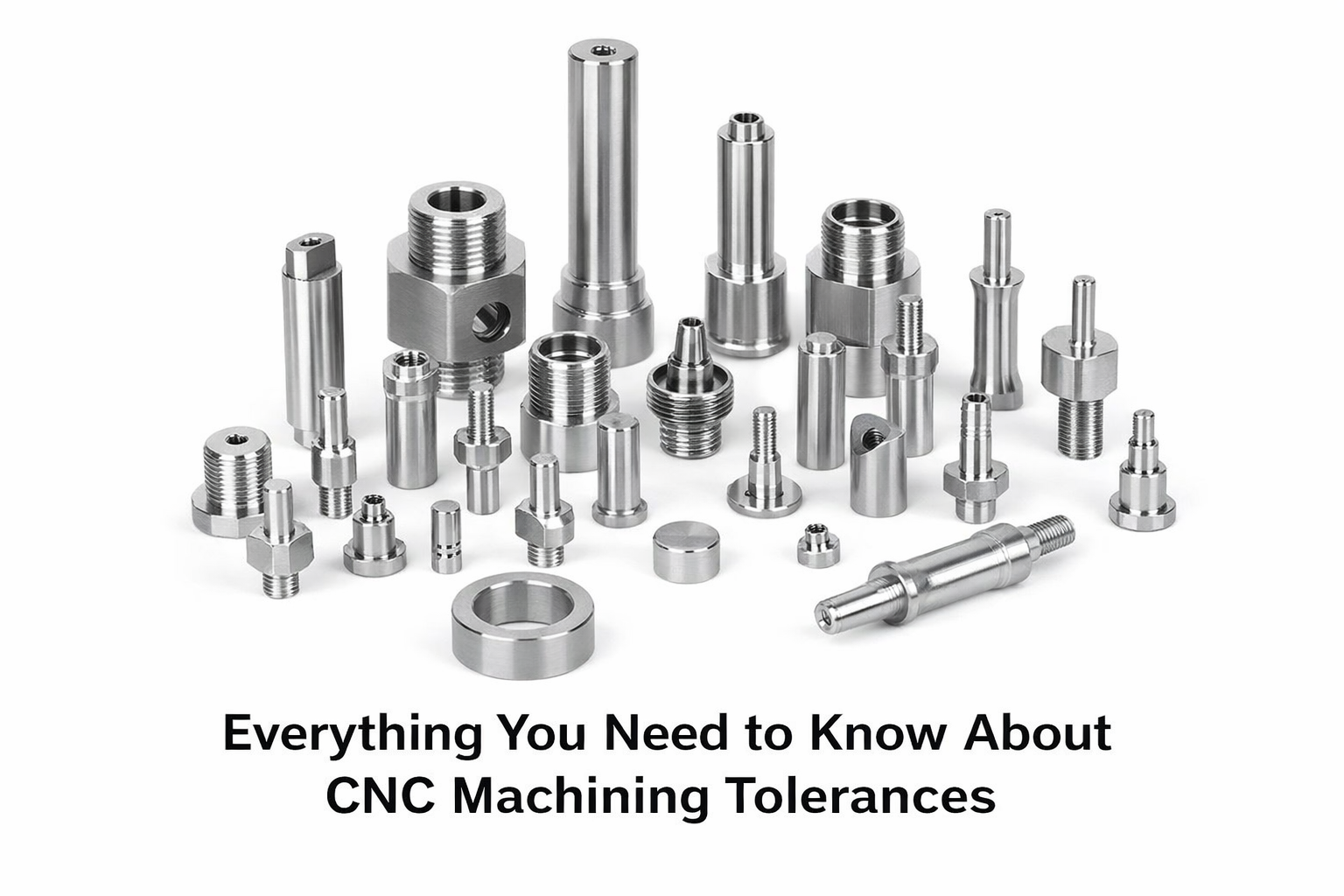
In precision manufacturing, CNC machining tolerances are not just technical specifications—they are critical factors that directly impact product performance, assembly success, production cost, and delivery timelines.
Many engineers and sourcing managers face the same challenges:
Parts don’t fit during assembly
Costs increase unexpectedly due to over-specified tolerances
Suppliers fail to provide engineering feedback
At Sochain Precision, we’ve seen firsthand that the difference between a successful project and a costly delay often comes down to one thing: choosing the right tolerance—not the tightest one.
This guide will walk you through everything you need to know about CNC machining tolerances, from fundamentals to advanced optimization strategies, helping you reduce cost while ensuring precision.
What Are CNC Machining Tolerances?
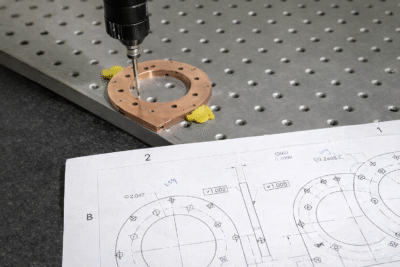
CNC machining tolerances refer to the allowable variation in a part’s dimensions. No machining process can produce a part with absolute perfection, so tolerances define the acceptable range of deviation.
Understanding the ± Symbol
For example:
A dimension of 50 mm ± 0.02 mm means the final part can range from:
49.98 mm to 50.02 mm
This range ensures that the part will still function properly even with slight variations.
Tight vs Loose Tolerances
Tight tolerance: ±0.005 mm → High precision, higher cost
Loose tolerance: ±0.1 mm → Lower cost, faster production
Key Insight
Tolerance is not about making parts “as precise as possible.”
It’s about making parts as precise as necessary.
At Sochain Precision, every drawing is reviewed to ensure tolerances align with real-world application—not just theoretical design.
Standard CNC Tolerances vs Custom Tolerances
Industry Standard Tolerances
If no tolerance is specified, most CNC machining suppliers default to:
±0.1 mm (±0.004″)
These are typically based on international standards such as:
ISO 2768-m (metals)
ISO 2768-c (plastics)
When Standard Tolerances Are Enough
Standard tolerances are suitable for:
Non-critical components
Cosmetic parts
Standalone structures
Using standard tolerances can significantly:
Reduce machining time
Lower production costs
Improve lead times
When You Need Custom Tolerances
Custom tolerances are required for:
Assembly interfaces (holes, shafts, threads)
Precision mechanical systems
Sealing surfaces
Example:
A hole that is too small by just 0.01 mm may prevent proper assembly.
Types of CNC Machining Tolerances
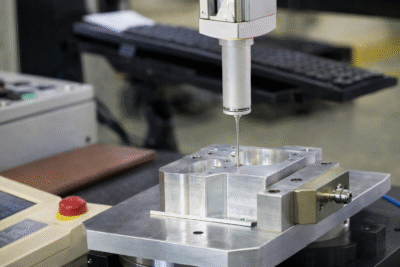
Understanding tolerance types helps engineers communicate design intent clearly.
1. Bilateral Tolerances
Format: ± value (e.g., ±0.05 mm)
Allows variation in both directions
Most commonly used
Application: General dimensions
2. Unilateral Tolerances
Variation in one direction only
Example: +0.00 / -0.05 mm
Application:
Used when a part must not exceed a maximum size, such as:
Press-fit components
Internal fits
3. Limit Tolerances
Defined by upper and lower limits
Example: 10.00 – 10.05 mm
Application:
Used in strict quality-controlled environments
4. GD&T (Geometric Dimensioning & Tolerancing)
GD&T is a more advanced system that controls:
Flatness
Concentricity
Position
Perpendicularity
It is widely used in:
Aerospace
Automotive
Medical industries
At Sochain Precision, our engineers are experienced in interpreting GD&T drawings and optimizing them for manufacturability.
5 Key Factors That Affect CNC Machining Tolerances
1. Part Function (Most Critical Factor)
The function of a part determines how precise it needs to be.
Critical features → tight tolerance
Non-critical features → standard tolerance
Example:
Hole for bearing → tight tolerance
Outer profile → looser tolerance
2. Cost vs Precision Trade-Off
Tighter tolerances increase:
Machining time
Tool wear
Scrap rates
Inspection complexity
Important Insight:
Over-specifying tolerances can increase costs by 2–5x without adding value.
3. Material Properties
Different materials behave differently during machining:
Aluminum: Easy to machine, good precision
Stainless steel: Strong but harder to machine
Plastics: Sensitive to heat, prone to deformation
4. Machine Capability
Tolerance depends on machine type:
3-axis CNC → standard precision
5-axis CNC → higher complexity and accuracy
Grinding → ultra-tight tolerances
At Sochain Precision, we use advanced multi-axis CNC machines to achieve tight tolerances efficiently.
5. Inspection & Quality Control
Tight tolerances require advanced inspection tools:
CMM (Coordinate Measuring Machine)
Micrometers
Optical comparators
We provide:
Full dimensional inspection reports
Material certifications
Quality traceability
When Do You Really Need Tight Tolerances?
Not every feature requires extreme precision.
Use Tight Tolerances For:
Bearing fits
Shaft alignment
Sealing surfaces
Safety-critical components
Industries That Require High Precision:
Aerospace
Automotive
Medical devices
Avoid This Common Mistake
Applying tight tolerances to the entire part instead of specific features.
At Sochain Precision, we help customers apply tight tolerances only where necessary, reducing cost without compromising performance.
How to Choose the Right CNC Machining Tolerance
1. Define the Application
Will the part be assembled?
Does it interact with other components?
2. Identify Critical Features
Focus tight tolerances on:
Holes
Mating surfaces
Functional interfaces
3. Use Standard Tolerances Where Possible
Reduces cost
Speeds up production
4. Collaborate with Your CNC Supplier
A good supplier should:
Review your drawings
Suggest improvements
Provide DFM feedback
Common CNC Tolerance Mistakes (And How to Avoid Them)
1. Overly Tight Tolerances
Leads to unnecessary cost increases
2. Missing Tolerances in Drawings
Causes production inconsistencies
3. Ignoring Material Behavior
Results in dimensional instability
4. Poor Assembly Fit
Leads to rework or failure
5. Lack of Inspection Planning
Risk of defective parts
Our engineering team proactively identifies and resolves these issues before production.
CNC Machining Tolerance Chart (Quick Reference)
| Process | Typical Tolerance |
| CNC Milling | ±0.01 – ±0.05 mm |
| CNC Turning | ±0.005 – ±0.02 mm |
| Grinding | ±0.001 – ±0.005 mm |
Note: Actual tolerance depends on material, geometry, and machine capability.
Why Choose Sochain Precision for Tight-Tolerance CNC Machining
1. Advanced CNC Capabilities
Multi-axis machining (3-axis, 4-axis, 5-axis)
Tight tolerances up to ±0.01 mm or better
2. Engineering-Driven Approach
Drawing optimization
GD&T expertise
DFM recommendations
3. Strict Quality Control
CMM inspection
Full dimensional reports
Material traceability
4. Flexible Production
Rapid prototyping
Small batch to mass production
5. Cost Optimization Strategy
Avoid unnecessary tight tolerances
Improve manufacturability
Reduce overall project cost
Conclusion: Precision Is About Smart Engineering
CNC machining tolerances are not just numbers on a drawing—they define how your product performs, fits, and succeeds in the real world.
The key takeaway:
Tighter is not always better
The right tolerance is application-driven
The right manufacturing partner makes all the difference
Get Expert Help with Your CNC Machining Project
At Sochain Precision, we go beyond manufacturing—we help you engineer better parts.
What You Get:
Free DFM analysis
Tolerance optimization
Fast quotation within 24 hours
High-precision machining with full inspection
FAQs
1. What is the tightest tolerance CNC machining can achieve?
The tightest tolerance achievable depends on the machine, material, and geometry. In most cases, high-end CNC machining can reach ±0.001 mm to ±0.005 mm, especially with secondary processes like grinding. However, achieving such precision significantly increases cost and lead time, so it should only be specified when functionally necessary.
2. How do CNC tolerances affect part lead time?
Tighter tolerances generally result in longer lead times because they require:
Slower machining speeds
More tool changes
Additional inspection steps
If your project has a tight deadline, relaxing non-critical tolerances can help accelerate production.
3. Can all CNC materials achieve the same tolerance levels?
No. Different materials behave differently during machining. For example:
Aluminum can achieve tighter tolerances more easily
Stainless steel may require more time and tool wear
Plastics may deform due to heat
Material selection plays a critical role in determining achievable tolerances.
4. What happens if tolerances are not specified in a drawing?
If tolerances are not defined, manufacturers typically apply default standard tolerances (commonly ±0.1 mm). This may lead to:
Poor assembly fit
Functional issues
Unexpected rework
Always specify tolerances for critical features to avoid ambiguity.
5. How do I know if my tolerances are too tight?
Signs that tolerances may be over-specified include:
High machining costs
Long production times
Supplier feedback requesting adjustments
A reliable CNC supplier should review your design and suggest optimizations to balance precision and cost.
6. What inspection methods are used to verify tight tolerances?
For high-precision parts, manufacturers use advanced metrology equipment such as:
Coordinate Measuring Machines (CMM)
Laser scanners
Optical measurement systems
These tools ensure that parts meet exact specifications and provide documented inspection reports.
7. Do tighter tolerances always improve product quality?
Not necessarily. While tight tolerances improve precision, they do not always enhance performance. Overly tight tolerances can:
Increase cost
Complicate manufacturing
Offer no functional benefit
Quality should be defined by fitness for purpose, not maximum precision.
8. Can CNC tolerances be adjusted after prototyping?
Yes. In fact, many projects refine tolerances after initial prototypes. Testing real-world performance helps engineers:
Identify unnecessary tight tolerances
Optimize cost for mass production
Improve manufacturability
This iterative approach is widely used in product development.
3 thoughts on “Everything You Need to Know About CNC Machining Tolerances (2026 Guide)”