 (+035) 527-1710-70
 NEWSLETTER

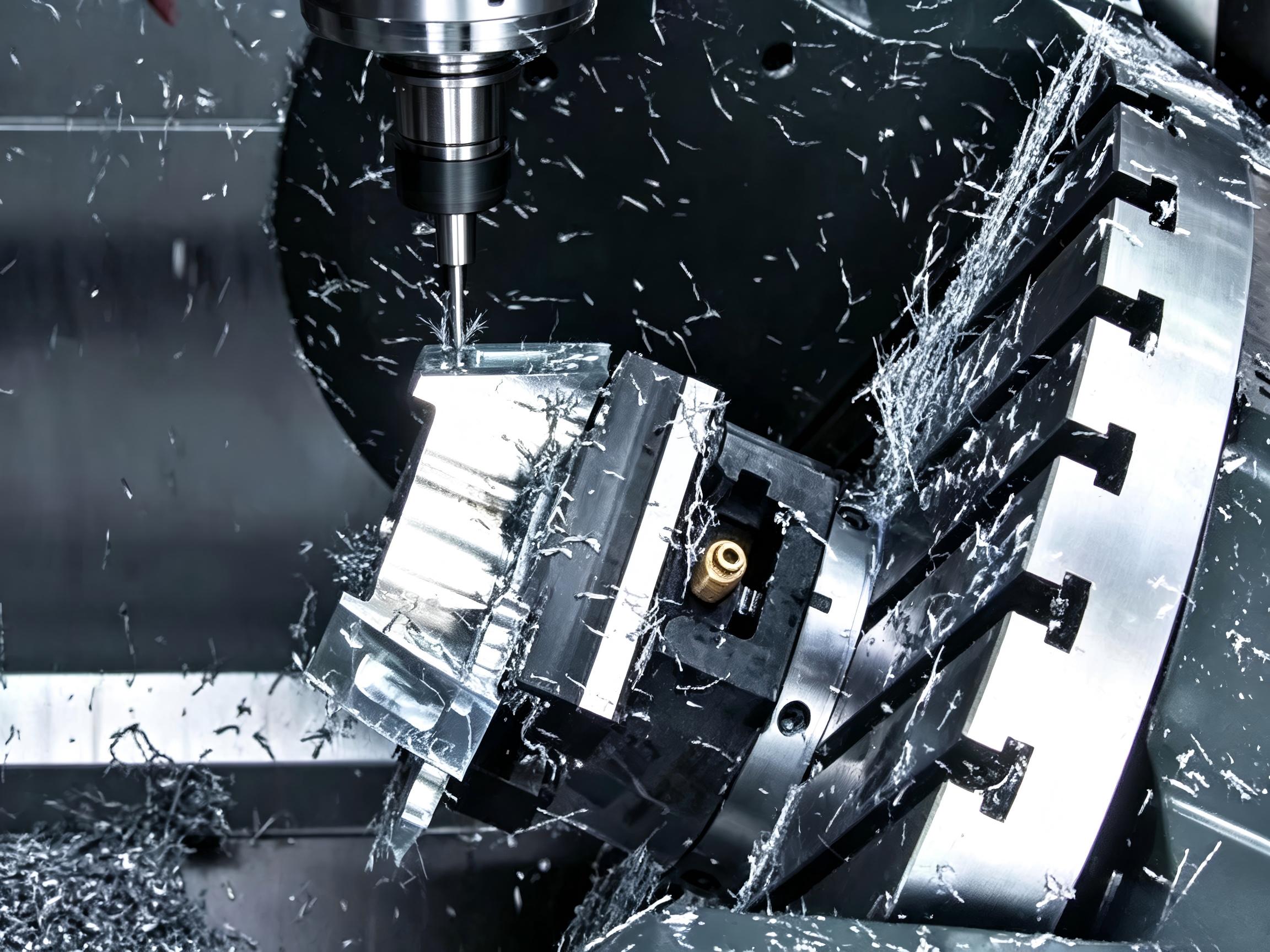
Aerospace CNC machining makes the precision parts that keep aircraft, spacecraft, and UAVs flying. It demands tight tolerances, traceable materials, and documented quality. This guide covers materials, tolerances, 5-axis machining, and how to work with a China-based aerospace CNC machining supplier.
What Is Aerospace CNC Machining?
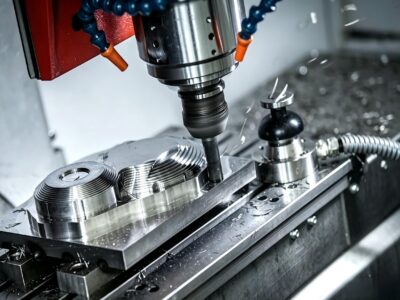
Aerospace CNC machining is the precision machining of components for aircraft, spacecraft, and related systems. Typical parts include structural brackets, housings, fittings, manifolds, and engine components.
The work combines tight tolerances, traceable materials, and strict documentation. Every part must be proven against the drawing before it ships.
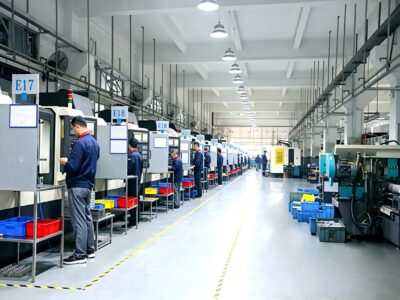
Sochain Precision is a China-based CNC machining manufacturer. We machine aerospace components with 3, 4, and 5-axis milling, CNC turning, and EDM where needed. Our team brings 25+ years of CNC expertise, and we have delivered more than 1 million custom parts to over 500 global clients.
Why Is CNC Machining Used for Aerospace Parts?
CNC machining fits aerospace for concrete reasons:
- Precision— controlled tolerances on complex features.
- Material range— aluminum, titanium, stainless steel, and engineering plastics.
- Repeatability— validated programs produce consistent parts.
- Documentation— inspection records support traceability.
- Flexible volumes— from prototypes to production runs.
Aerospace is not high-volume consumer production. It is accurate, documented, and often complex. CNC machining gives you that control, from the first article to the full run.
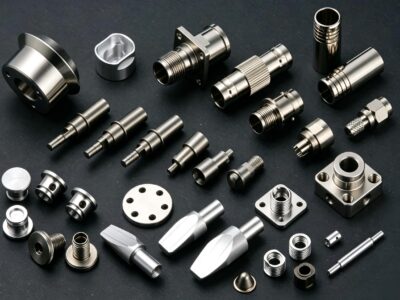
What Materials Are Used in Aerospace CNC Machining?
Material choice drives weight, strength, heat resistance, and cost.
| Material | Why It Is Used | Typical Parts |
| Aluminum 7075-T6 | High strength-to-weight ratio | Structural brackets, fittings |
| Aluminum 2024 | Good fatigue resistance | Airframe structures |
| Titanium Ti-6Al-4V | High strength, heat and corrosion resistance | Engine and structural parts |
| Stainless 17-4 PH, 304, 316 | Strength and corrosion resistance | Fittings, housings, fasteners |
| Superalloys such as Inconel | High-temperature strength | Engine components, confirm grade with supplier |
| PEEK, PEI (Ultem) | Lightweight, insulating | Interior and electrical parts |
Sochain Precision machines aerospace materials including 7075-T6, 2024, titanium Ti-6Al-4V, 17-4 PH, stainless steel, PEEK, and PEI (Ultem), among more than 100 material options. For superalloys such as Inconel, confirm the grade and availability with our engineers before quoting.
Not sure whether 7075-T6, titanium, or stainless steel is the right choice? Send us your material specification for an engineering review.
How Does 5-Axis Machining Improve Aerospace Parts?
5-axis machining is widely used for aerospace components with complex surfaces, multiple orientations, deep features, and demanding positional requirements. Not every part needs it.
- 3-axis— simpler prismatic components such as plates, brackets, and basic housings.
- 4-axis— rotational and indexed features, radial holes, and slots.
- 5-axis— complex multi-surface components machined in one setup.
The value of 5-axis is fewer setups. Each setup change can shift datums. Machining several faces in one clamping keeps features aligned and improves surface finish.
Sochain Precision runs 3, 4, and 5-axis machines for aerospace work. See our 5-axis machining service for capabilities.
What Tolerances Can Aerospace CNC Machining Achieve?
These are common CNC machining reference tolerances, not aerospace standards:
- General features— ±0.02 mm.
- Functional features— ±0.01 mm.
- Critical features— ±0.005 mm.
These values are manufacturing reference points rather than aerospace industry standards. The actual achievable tolerance depends on feature size, geometry, material, datum structure, machine, machining strategy, temperature, inspection equipment, GD&T, and drawing requirements. Confirm it against the part drawing.
Sochain Precision advertises precision accuracy to ±0.005 mm as a machining capability. We apply it only where the function and drawing require it. Over-tolerancing adds cost without adding value.
Need ±0.01 mm or tighter? Send your drawing, and we will review the critical features, GD&T, and machining approach. Start the review.
What Aerospace Parts Can Be CNC Machined?
Aerospace machined parts cover many families, with concrete examples:
| Aerospace Application | Typical CNC Process | Common Materials |
| Aircraft brackets | 3/4/5-axis milling | Aluminum, titanium |
| Actuator housings | 5-axis milling | Aluminum, stainless steel |
| Sensor housings | 4/5-axis milling | Aluminum, stainless steel |
| Avionics enclosures | 5-axis milling | Aluminum |
| Valve bodies | 5-axis milling, turning | Stainless steel, titanium |
| Hydraulic manifolds | 5-axis milling | Aluminum |
| Landing gear components | 5-axis milling, turning | High-strength steel, titanium |
| Engine support components | 5-axis milling, EDM | Titanium, superalloys |
| Satellite brackets | 5-axis milling | Aluminum, titanium |
| UAV components | 4/5-axis milling | Aluminum, PEEK |
| Aerospace test fixtures | Milling, turning | Aluminum, steel |
This gives a concrete picture of what can be machined. Your drawing defines the exact process and inspection level.
What Quality and Documentation Are Required?
Quality control is built into the process, not bolted on at the end.
Sochain Precision operates under an ISO 9001:2015-certified quality management system. We support RoHS requirements, verified material traceability, and comprehensive inspection reports.
Inspection methods we use:
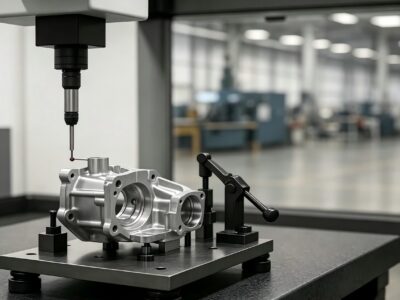
- CMM inspection for critical dimensions.
- Calibrated measuring equipment, including calipers, micrometers, and height gauges.
- First-article inspection before production runs.
- Dimensional inspection against the drawing.
Documentation you can request:
- Material certification and traceability records.
- Dimensional inspection reports and CMM reports.
- First-article inspection records.
Aerospace projects can be reviewed according to your required quality, inspection, and documentation specifications. Confirm the exact documentation list with the supplier before production.
Need material certificates, inspection reports, or first-article documentation? Include your requirements with the RFQ.
What Finishing Processes Are Used for Aerospace Parts?
Finished aerospace parts often get surface treatments:
- Anodizing— corrosion protection for aluminum.
- Passivation— protection for stainless steel.
- Primer and paint— environmental protection.
- Shot peening— adds compressive stress for fatigue life, coordinated through partners where required.
- Polishing and bead blasting— surface quality.
Sochain Precision coordinates finishing with machining. See our anodized CNC machined parts page for surface options. Confirm the treatment and the surfaces that must stay masked on the drawing.
How Should You Design Aerospace Parts for CNC Machining?
Design choices drive cost and quality. Follow these rules:
- Avoid unnecessarily deep pockets.Deep pockets increase tool deflection and machining time.
- Use appropriate internal radii.Internal corners need tool-radius consideration.
- Control thin walls.Thin sections can deform during machining.
- Define critical tolerances.Do not apply ±0.005 mm everywhere.
- Use GD&T.Especially position, flatness, perpendicularity, concentricity, and profile.
- Identify critical surfaces.This helps the manufacturer prioritize inspection and process control.
Our engineers review your drawing and flag risks before machining. That review is free and part of the quote process.
How Much Does Aerospace CNC Machining Cost?
Cost depends on the part. The main drivers are:
- Material price and utilization.
- Machining time and number of setups.
- 3/4/5-axis requirements.
- Tolerance level.
- Surface finish.
- Heat treatment and coating.
- Inspection and documentation.
- Quantity and annual volume.
There is no fixed per-part price. Send the drawing for a real quote based on machining and inspection effort.
What Should You Include in an Aerospace CNC Machining RFQ?
A complete RFQ gets an accurate quote. Use this checklist:
| RFQ Information | Why It Matters |
| 2D drawing | Defines dimensions and GD&T |
| 3D CAD model | Defines complex geometry |
| Material and temper | Determines machining and properties |
| Quantity | Determines production strategy |
| Annual volume | Helps optimize the process |
| Surface finish | Determines machining and finishing |
| Heat treatment | Affects final properties |
| Coating or plating | Affects cost and lead time |
| Inspection requirements | Determines QC scope |
| Material certificates | Supports traceability |
Send these with your RFQ. Sochain Precision reviews each request and responds with a clear quote and engineering feedback.
How Do You Choose an Aerospace CNC Machining Supplier?
Look for proven capabilities, not promises:
- Multi-axis machining: 3, 4, and 5-axis.
- Aerospace materials: aluminum, titanium, stainless steel, PEEK.
- Documented quality: ISO 9001:2015, inspection reports, material traceability.
- Engineering support: DFM review and GD&T expertise.
- Prototype-to-production: from first article to volume.
- Clear communication and on-time delivery.
Ask how the supplier handles tight tolerances, hard materials, and inspection. The answers show whether they can do the job.
Why Choose a China Aerospace CNC Machining Supplier?
Working with a machining partner in China is a commercial decision, not just a cost decision.
- Manufacturing capability— 3/4/5-axis machining, turning, EDM, and finishing under one roof.
- Engineering communication— engineers review your drawing and answer technical questions directly.
- Prototype-to-production— one partner from first article to volume.
- Material sourcing— a broad material supply base.
- Inspection and documentation— CMM, calibrated tools, and traceability records.
- International shipping— worldwide delivery.
- Documentation— material certificates and inspection reports.
- Cost efficiency— competitive pricing without cutting quality.
Sochain Precision is a China-based machining partner that ships worldwide. We combine engineering depth with cost-efficient production.
Why Choose Sochain Precision for Aerospace CNC Machining?
Here is the evidence behind this guide.
Manufacturing capabilities
- 3-axis CNC milling.
- 4-axis CNC machining.
- 5-axis CNC machining.
- CNC turning.
- EDM where applicable.
- Prototype machining, low-volume production, and production manufacturing.
Quality
- ISO 9001:2015-certified quality management system.
- CMM inspection and calibrated measuring equipment.
- Material certification and traceability.
- First-article inspection and dimensional inspection.
Materials
- Aluminum 7075-T6 and 2024.
- Titanium Ti-6Al-4V.
- Stainless steel, including 17-4 PH.
- PEEK and PEI (Ultem).
- Selected superalloys on request.
Track record
- 25+ years of CNC expertise.
- 500+ global clients.
- 1M+ custom parts delivered.
- 99.8% customer approval.
This is the evidence behind the guide. Send your drawing and see how we handle your aerospace part.
CNC Machining vs Other Aerospace Manufacturing Processes
CNC machining is not the only aerospace process. Match the process to the part.
| Process | Best For |
| CNC machining | Low/medium volumes, tight tolerances |
| Sheet metal | Thin-wall brackets and enclosures |
| Forging | High-strength structural components |
| Die casting | Higher-volume complex metal parts |
| Additive manufacturing | Complex lightweight geometries and prototypes |
Use CNC machining when you need precision, documentation, and flexible volumes. For thin walls, sheet metal may fit better. For very high volumes, casting or forging can win on cost. Sochain Precision also coordinates die casting and injection molding partners when volumes justify them.
FAQs
- What materials are used in aerospace CNC machining?
Aluminum 7075-T6, 2024, titanium Ti-6Al-4V, stainless steel including 17-4 PH, PEEK, and PEI (Ultem). Superalloys such as Inconel are available on request; confirm the grade with the supplier.
- What tolerances can aerospace CNC machining achieve?
Common reference tolerances are ±0.02 mm general, ±0.01 mm functional, and ±0.005 mm critical features. These are machining capabilities, not aerospace standards. Actual values depend on geometry, material, datum structure, machine, inspection, and drawing requirements.
- Why is 5-axis machining used for aerospace parts?
5-axis machines cut complex surfaces and multiple faces in one setup. Fewer setups keep features aligned and improve surface finish. Not every part needs it; 3-axis and 4-axis handle many components.
- Can you machine titanium aerospace parts?
Yes. Sochain Precision machines titanium Ti-6Al-4V with matched tooling and controlled parameters. Titanium is tough on tools, so rigid setups and heat management matter.
- Can you provide material certificates?
Yes. Material certification and traceability records are available on request for aerospace projects.
- Can you provide CMM inspection reports?
Yes. Critical dimensions are measured with CMMs and calibrated tools, and inspection reports are available on request.
- What is first-article inspection?
Checking the first part against the drawing before the production run starts. It verifies the process before you commit to the batch.
- Is Sochain Precision AS9100 certified?
Sochain Precision operates under an ISO 9001:2015-certified quality management system. We do not claim AS9100 certification. Aerospace projects can be reviewed according to your required quality, inspection, and documentation specifications.
- How much does aerospace CNC machining cost?
It depends on material, machining time, number of setups, tolerance, surface finish, heat treatment, coating, inspection, documentation, and quantity. Send the drawing for a real quote.
- How do I request an aerospace CNC machining quote?
Send the 2D drawing or 3D CAD, material and temper, quantity and annual volume, tolerances, surface finish, and documentation requirements. Sochain Precision reviews it and responds with a quote and engineering feedback.
Start Your Aerospace CNC Machining Project
Aerospace CNC machining needs precision, materials, and documentation. Sochain Precision provides 3/4/5-axis machining, an ISO 9001:2015 quality system, material traceability, and prototype-to-production support. Send your drawing for a free engineering review and a quote. Contact us to start your project.